Guide

E-scooters, e-bikes, and golf carts from China ship as Class 9 when the drive battery stays installed.

Lithium-ion or sodium-ion e-scooters, e-bikes, golf carts, and similar battery-powered vehicles export from China as Class 9 dangerous goods with the battery installed—under IMDG Amendment 42-24 (mandatory from 1 January 2026) that normally means UN3556, UN3557, or UN3558 by chemistry, not UN3171. Loose or spare packs ship under UN3480 or UN3481 instead. Yihang Shipping in Dalian checks the vehicle file, state of charge, and dangerous goods declaration before booking sea or air, with ocean freight quoted prepaid.

Published 2026-10-26 · By Delia Qu, Deputy General Manager

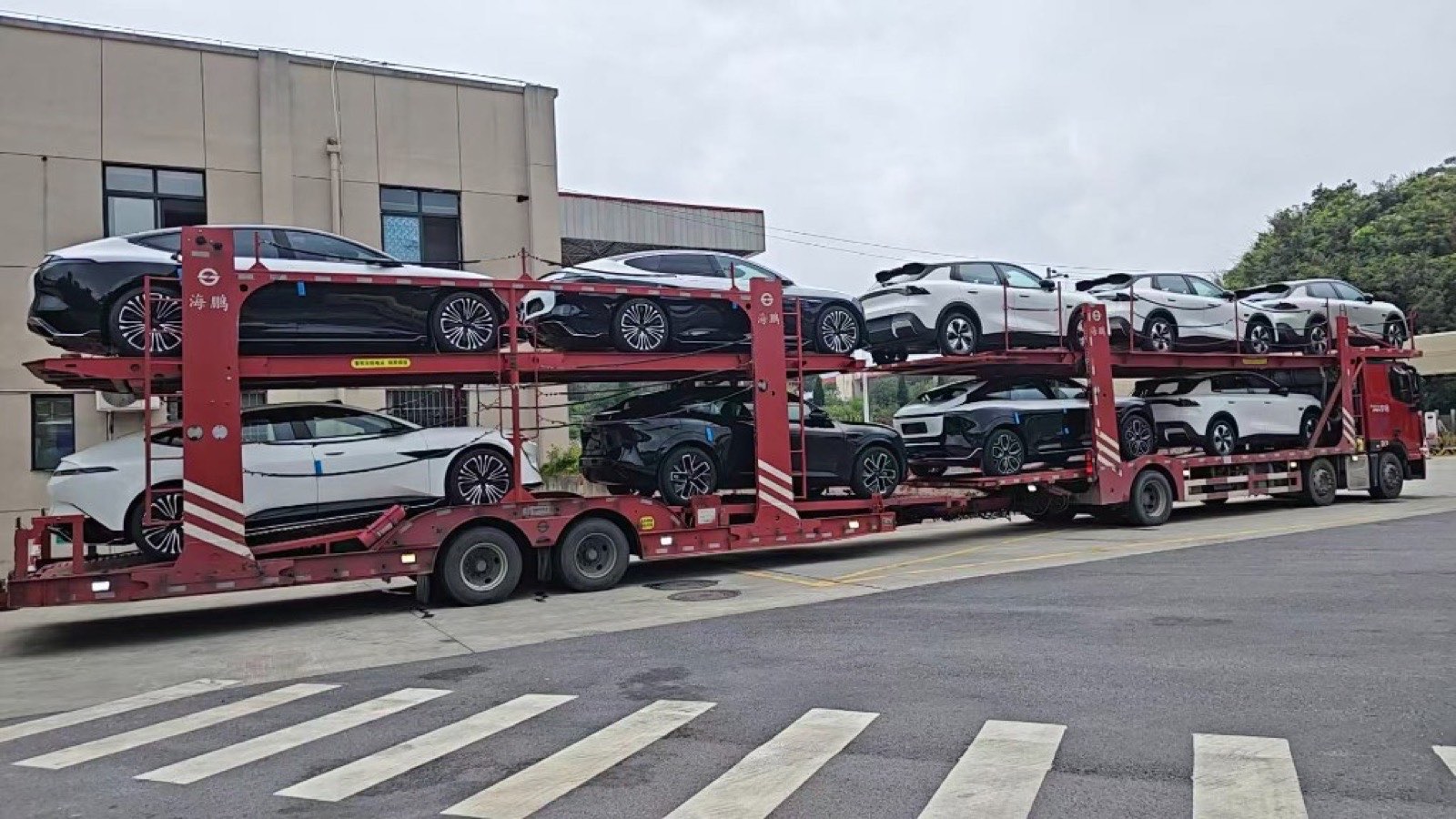
Small wheeled vehicles prepared for export loading
Shipment UN entry (typical) When it applies
E-scooter or e-bike, lithium-ion battery installed UN3556 — Vehicle, lithium ion battery powered Sea: IMDG 42-24+ (not UN3171 for lithium-ion vehicles). Air: IATA PI 952, UN3556; SoC rules apply.
Golf cart or utility vehicle, lithium-ion installed UN3556 Often FCL, flat rack, or RoRo by size; same Class 9 vehicle entry when the pack stays in the unit.
Vehicle with lithium-metal drive battery UN3557 — Vehicle, lithium metal battery powered Rare on consumer imports; confirm chemistry on the spec sheet before booking.
Vehicle with sodium-ion drive battery UN3558 — Vehicle, sodium ion battery powered New IMDG/IATA entries alongside UN3551/3552 for loose sodium-ion cells.
Wet battery, sodium-metal, or sodium-alloy drive UN3171 — Battery-powered vehicle or equipment IMDG 42-24 keeps UN3171 for these chemistries—not for lithium-ion or sodium-ion vehicles.
Spare or loose lithium battery (no vehicle) UN3480 or UN3481 Class 9 cells/batteries or batteries packed with equipment—see the lithium batteries guide, not this vehicle page.
Vehicle without drive battery installed General cargo (no Class 9 vehicle entry) Battery shipped separately is declared on its own UN entry; the empty frame is not a UN3556 vehicle.

Pre-booking checklist for battery-powered vehicles from China

  1. Confirm chemistry: lithium-ion, lithium-metal, sodium-ion, or wet/other—this sets UN3556, UN3557, UN3558, or UN3171 on sea.
  2. State whether the drive battery is installed, removed, or spare packs are included on the same bill of lading.
  3. For air or express samples: set state of charge per IATA DGR Packing Instruction 952 (mandatory ≤30% rated capacity or ≤25% indicated capacity for batteries over 100 Wh from the 67th edition, effective 1 January 2026, unless competent-authority approval applies).
  4. Collect UN38.3 test summary for the cell/battery type, SDS with section 14 complete, and watt-hour rating or battery mass from the manufacturer.
  5. Send photos, dimensions, and weight per unit; note if the unit must stay upright or needs cradles in the container.
  6. Choose equipment: cartons/LCL or FCL for folded e-scooters; 20GP/40HC or flat rack for golf carts; RoRo or flat rack for larger self-propelled utility vehicles—see /insights/shipping-construction-equipment-from-china/ for heavy units.
  7. Prepare dangerous goods declaration and export packaging inspection if required for dangerous goods from China; invoice and packing list must match the UN entry.
  8. Name destination port or door, Incoterm, and whether the move is China export only or cross-trade (third-country consignee)—DG rules follow the mode, not the trade lane.
  9. Request carrier dangerous goods acceptance before naming a vessel or flight; booking is firm only after acceptance.

How this guide differs from the lithium and dangerous goods pages

  • /insights/lithium-batteries-dangerous-goods/ covers UN3480, UN3481, UN38.3, labels, and spare battery cartons—not wheeled vehicles with installed drive batteries.
  • /solutions/dangerous-goods/ explains how Yihang quotes all DG classes; this page is the vehicle-specific classification and booking checklist.
  • /insights/shipping-construction-equipment-from-china/ covers excavators, loaders, and RoRo for heavy self-propelled machines; link here for golf-cart-scale and personal mobility imports.

IMDG Amendment 42-24 and UN3171 versus UN3556–3558

  • IMO Resolution MSC.556(108), adopted May 2024, enters into force on 1 January 2026 and restructures battery-powered vehicle entries in the IMDG Code (Amendment 42-24).
  • Lithium-ion and sodium-ion vehicles with batteries fitted are assigned to UN3556, UN3557, or UN3558 instead of the generic UN3171 entry used for many lithium vehicles in earlier editions.
  • UN3171 remains for battery-powered vehicles or equipment powered by wet batteries, sodium metal batteries, or sodium alloy batteries when the battery is installed—confirm on the manufacturer spec, not the marketing name ‘electric cart’.
  • Hybrid vehicles with fuel and battery may fall under UN3166 (vehicle, flammable gas powered or vehicle, flammable liquid powered)—send fuel type and battery chemistry on the inquiry.
  • Cross-trade shipments (China load, consignee in Mexico, Caribbean, USA, Europe, or elsewhere) use the same UN entries on the Chinese export declaration and the ocean or air carrier file.

When the shipment is dangerous goods versus general cargo

  • Installed drive battery: Class 9 vehicle entry (UN3556/3557/3558 or UN3171 as above) for sea and air when the regulations apply to that chemistry.
  • Spare batteries in the same shipment: normally additional Class 9 packages under UN3480 or UN3481 with their own packing instructions—do not describe spare packs as ‘accessories’ without a UN number.
  • Vehicle exported without battery: the chassis may ship as general cargo if no other DG is present; the removed battery file is quoted separately.
  • Damaged, defective, or recall batteries follow stricter rules and are not booked as standard retail e-scooter cargo.
  • Misdeclaring ‘sports equipment’ or ‘parts’ while a lithium drive battery remains installed is a common reason carriers reject the booking or hold cargo at the terminal.

State of charge, UN38.3, and SDS

  • Manufacturers must make the UN Manual of Tests and Criteria section 38.3 test summary available for the cell or battery type; the forwarder and carrier use it to confirm the model matches the shipment.
  • SDS (MSDS) section 14 must list transport classification consistent with the declaration—an SDS that omits Class 9 does not remove DG obligations for lithium drive batteries.
  • For air export under IATA DGR Packing Instruction 952, vehicles in UN3556, UN3557, and UN3558 with batteries over 100 Wh must be offered at not more than 30% state of charge or 25% indicated battery capacity from 1 January 2026 (67th edition)—higher SoC needs competent-authority approval.
  • Sea stowage does not replace SoC discipline: terminals and insurers may still ask for reduced charge; follow the packing instruction and carrier acceptance conditions for the sailing.
  • Full lithium document rules for loose batteries: /insights/lithium-batteries-dangerous-goods/.

Packaging, cradling, and container choice

  • Many folded e-scooters ship in retail cartons—each carton may need Class 9 marks if the scooter is classified as equipment containing a lithium battery (UN3481) when not declared as UN3556 vehicle; confirm with the manufacturer’s intended transport configuration.
  • When declared as UN3556 vehicles, IMDG packing instructions may allow unpackaged transport if the unit stays upright and stable; units that tip need cradles, frames, or blocking in the container.
  • Golf carts and four-wheel utility vehicles often need FCL (20GP/40HC), flat rack, or RoRo depending on length, width, and whether the unit is self-propelled—send L×W×H and photos.
  • LCL: some consolidators accept declared Class 9 vehicles and many do not; mixed DG and general cargo in one LCL booking is often refused.
  • Block and lash in the container; protect terminals against short circuit; keep keys and controllers secured so units cannot energize in transit.

Declarations, export clearance, and common rejection reasons

  • Signed dangerous goods declaration matching the UN number, proper shipping name, and packing instruction on the IMDG or IATA file.
  • For sea FCL, container placarding when the IMDG rules and special provisions (for example provisions linked to UN3556–3558 in Amendment 42-24) require visible Class 9 marks on the CTU.
  • Chinese export dangerous goods packaging inspection when applicable—book when packaging is known, not on loading day.
  • Rejections we see on customer files: wrong UN number (UN3171 still used for lithium-ion golf carts after 42-24), missing UN38.3 for the installed pack, SoC too high for air, undeclared spare batteries in the same container, and booking general cargo to avoid DG surcharges.
  • Freight is quoted prepaid only; destination terminal and import clearance are listed separately when you ask for them on the quote.

Lane planning (no transit times or rates on this page)

  • Mexico and Latin America: ocean to Pacific or Atlantic gateways—see /lanes/china-to-mexico/ and /insights/china-to-peru-shipping/ for port and door planning; battery vehicles still need DG acceptance on the vessel.
  • Caribbean and island destinations: often transshipment after a mainland hub—/lanes/china-to-caribbean/ for prepaid routing context.
  • USA: Class 9 ocean file plus importer-side security filing when applicable—/lanes/china-to-usa/ and /insights/isf-filing/.
  • Canada, Europe, Australia, New Zealand: same UN classification on export; inland delivery quoted on DAP or DPU when you send the address—/lanes/china-to-canada/, /lanes/china-to-europe/, /lanes/china-to-australia/, /lanes/china-to-new-zealand/.
  • Air samples: useful for small e-scooter batches when PI 952 and airline acceptance allow; most commercial volume moves by sea FCL or LCL where accepted.

What to send Yihang for a vehicle DG quote

  • Product type (e-scooter, e-bike, golf cart, utility vehicle), quantity, and manufacturer/model.
  • Battery chemistry, watt-hour rating or capacity, installed versus spare batteries.
  • Dimensions and gross weight per unit, carton size if retail-packed, photos.
  • UN38.3 test summary and SDS when available; if not, say so so the desk can list what to request from the factory.
  • Origin city in China, destination port or door, Incoterm, ready date, and preferred mode (sea FCL, LCL, or air).
  • Use /quote/ or the form below; reply includes document gaps and prepaid freight options after carrier acceptance is checked.

Sources

Linked pages are the publishers’ own. A figure on this page is theirs, for the date named. It is not a Yihang rate.

Questions shippers ask

How do I ship golf carts from China with lithium batteries?

With the lithium-ion drive battery installed, sea export under IMDG Amendment 42-24 is normally UN3556 Vehicle, lithium ion battery powered, Class 9, with UN38.3, SDS, dangerous goods declaration, and carrier acceptance. Choose FCL, flat rack, or RoRo by unit size. See this page’s checklist and /solutions/dangerous-goods/ for quoting.

What is UN3556 shipping?

UN3556 is the proper shipping name Vehicle, lithium ion battery powered, Class 9. It applies to self-propelled vehicles that run on installed lithium-ion batteries—such as many e-scooters, e-bikes, and lithium golf carts—under IMDG 42-24 and IATA DGR Packing Instruction 952, instead of UN3171 for those chemistries.

Can I still declare e-scooters as UN3171?

For lithium-ion or sodium-ion drive batteries on ocean freight, IMDG Amendment 42-24 (mandatory from 1 January 2026) expects UN3556, UN3557, or UN3558. UN3171 remains for wet, sodium-metal, or sodium-alloy battery vehicles. Using the wrong entry is a frequent booking rejection.

Are e-scooters dangerous goods on airplanes from China?

When shipped as vehicles with installed batteries, they fall under IATA DGR vehicle provisions (UN3556 and related entries) and Packing Instruction 952, including state-of-charge limits for batteries over 100 Wh from 1 January 2026. Airline and airport acceptance is required; many small retail cartons instead ship under UN3481 when classified as equipment—confirm the manufacturer’s transport mode.

How do spare batteries ship with the same order?

Spare lithium-ion packs normally ship as UN3480 or UN3481 with separate marks and declarations, not inside a UN3556 vehicle entry. Mixed files need segregation and carrier approval—see /insights/lithium-batteries-dangerous-goods/ for spare-battery documents.

Is a golf cart without a battery dangerous goods?

An empty chassis without an installed drive battery is usually general cargo if no other hazardous material is present. The removed battery, if shipped, is declared under the battery UN entry on its own.

Can battery vehicles ship LCL from China?

Only when the consolidator and line accept Class 9 for that week. Many e-scooter importers use FCL or approved LCL DG slots; golf carts often need FCL or flat rack. Send the UN details early for an acceptance check.

Does Yihang quote freight collect for dangerous goods vehicles?

No. Ocean and air freight are quoted prepaid. Import-side charges are named separately when requested.

Does this page publish rates or transit times?

No. DG vehicle quotes depend on carrier acceptance, equipment, port pair, and the week.

Send the battery vehicle file

Model, quantity, battery chemistry, Wh rating, installed vs spare batteries, UN38.3/SDS if ready, dimensions, origin, destination, sea or air. Prepaid quote after document check.

Step 1 — lane and contact

Email or phone — one is enough.

Request a quote WhatsApp