
Who it is for
- Buyers of hot-rolled, cold-rolled, or coated coil from North China mills
- Importers of plate, pipe, rebar, or structural sections
- Projects where steel and machinery move together
Solutions
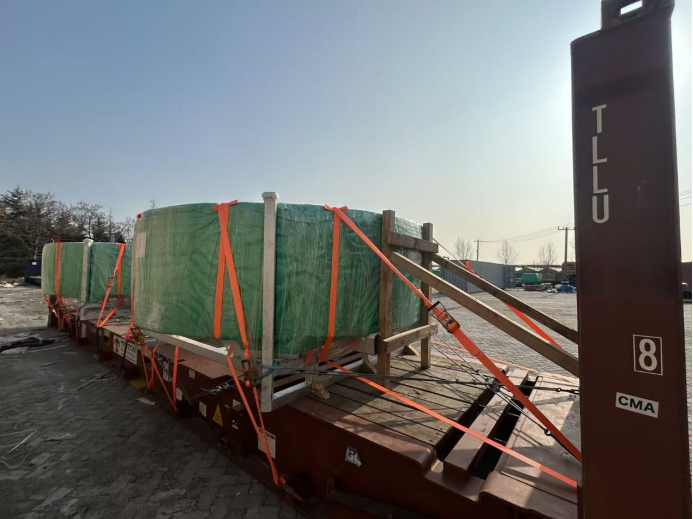
Steel from China is planned on weight, length, and lashing before it is planned on cube. A 20-foot container usually reaches its payload with steel long before it looks full. Pipe and sections up to about 12 metres can go in a 40-foot box; longer pieces need a flat rack or a breakbulk vessel. Coils sit on a cradle, then the cradle is braced into the container, and only then lashed. Cargo insurers publish the same three claims: a coil that walks, a box refused for weight, and rust from a wet loading. Steel is a routine file at Yihang. Mills in the northeast and north load through Dalian or Yingkou, which usually adds a feeder. A mill in the south should not be trucked north to Dalian. This page is not a price or a named client.
| Cargo | What usually decides | Equipment |
|---|---|---|
| Coils, plate, short bundles | Weight and floor load. The box looks empty first. | 20-foot container |
| Pipe and sections up to about 12 m | Length, then payload. | 40-foot container |
| Longer, wider, or a full-vessel lot | Length and total tonnes. Named on the quote. | Flat rack or breakbulk — see break bulk shipping for liner, part-cargo, and charter comparisons |
A 20-foot payload is often about 21–28 tonnes on the box plate. The road limit at destination can be lower. The quote names the load per box. It is not a booking.
These are failures published by cargo insurers and border agencies. They are not a named Yihang client. The fix is what the quote specifies before loading.
TT Club’s guidance on coiled materials says a coil should not sit on the container floor. It goes on a cradle, the coil is strapped to the cradle, the cradle is blocked and braced, and only then is it lashed. Use the lashing rings on the floor sides, one lashing per ring, not the rings on the top rail. HDI’s note on steel coils adds that those rings are rated near one tonne and that lashing alone does not hold a heavy coil: the brace has to carry the force into the corner posts or the walls. Eye-to-rear stow needs more lashing than eye-to-side. On the file, the cradle, the brace, and the lashing are agreed before the truck arrives, and the doors are photographed before they close.
A 40-foot looks as if it will take more coils. Dense coil reaches the payload with space left, and the terminal or the destination road refuses the box. The fix is to plan tonnes per box from the piece weights before choosing 20-foot or 40-foot. Send the delivery address as well as the port. The quote uses the payload on the box and the road limit, not how full the photo looks.
TT Club’s same note says the container has to be sound, clean, and dry, and the coils themselves dry. Wet dunnage is a source of moisture. The Standard Club’s steel guide treats loading in rain as a claim that started before the ship, and says the bill of lading should be claused if the cargo goes on wet. On the file: refuse wet cargo or record it, keep the mill wrap intact, and add VCI and desiccant when the steel is cold-rolled or coated. Hot-rolled is less sensitive. Photos at stuffing are the record.
Product, piece weight, dimensions, and the number of pieces. Coils: outer diameter, width, and weight each.
Payload and floor load first, then length. The reply says container, flat rack, or breakbulk.
Lashing plan, photos at stuffing, and the export file before cutoff.
A sketch of the box. Not a freight rate.
The same job, pointed at a country. Open the lane if you already know the destination.
China to USA shipping: FCL, LCL and air. West and East Coast ports with inland doors on one quote. Quote within 24h.
Canada China to CanadaChina to Canada FCL, LCL, flat rack and DG via Vancouver and Prince Rupert. CARM, steel surtax and ISPM 15 checks before booking. Quote within 24h.
Singapore China to SingaporeChina to Singapore FCL, LCL and air from Dalian or South China. Hub moves to ASEAN when needed. Quote within 24h with origin and cargo.
Australia China to AustraliaChina to Australia FCL, LCL and air to Sydney, Melbourne, Brisbane and Fremantle. Biosecurity and door terms on the quote. Quote within 24h.
New Zealand China to New ZealandChina to New Zealand FCL, LCL and air to Auckland, Tauranga and Lyttelton. MPI and door delivery on the quote. Quote within 24h.
Mexico China to MexicoFreight forwarder China to Mexico: ocean FCL, LCL and air to Manzanillo, Lázaro Cárdenas and Veracruz. Customs basics on the quote. Reply within 24h.
Caribbean China to CaribbeanFreight forwarder China to Caribbean: FCL, LCL and air to Trinidad, Guyana, Guadeloupe and island ports. OOG quoted prepaid. Desk reply within 24h.
South America China to South AmericaFreight forwarder China to South America: FCL, LCL and air to Argentina, Venezuela and regional ports. OOG quoted prepaid. Desk reply within 24h.
Europe China to EuropeChina to Europe by sea, rail and air. Rotterdam, Hamburg, Antwerp and UK gateways with inland delivery on request. Quote within 24h.
Russia and Central Asia China to Russia and Central AsiaChina to Russia and Central Asia by rail, plus ocean or truck when needed. Door-to-station on one file. Quote within 24h.
Linked pages are the publishers’ own. A rule on this page is theirs. It is not a Yihang rate.
It stops at the container’s payload and the road weight limit at destination, not at the cube. The payload is on the box, often around 21–28 tonnes for a 20-foot, and inland road limits can be lower. Send the piece weights and the delivery address; the quote names the load per box.
On cradles or saddles, eye-to-sky or eye-to-side depending on the coil and the box, then blocked and lashed so they cannot move. Heavy coils need the weight spread over the floor. The lashing plan is agreed before loading, and photos are taken at stuffing.
Dry cargo at loading, intact mill wrapping, VCI paper or film, and desiccant where needed. Condensation in the box is the usual cause. Say if the steel is cold-rolled or coated; it is more sensitive than hot-rolled.
Containers suit a few hundred tonnes or less going to a container port. Larger lots, or very long or heavy pieces, often go breakbulk. Send the total tonnage and the port; the reply compares both when both make sense.
Door to door Buyer consolidation Multi-container projects Project cargo Break bulk shipping Exhibition logistics Refractory brick Wood products Flat rack and open top Dangerous goods Reefer Chinese suppliers Mining equipment South Africa