Guide

Can you ship lithium batteries from China? Yes—as Class 9 dangerous goods.

Yes. Lithium batteries ship from China by sea and air as Class 9 dangerous goods: UN3480 for batteries on their own, UN3481 for batteries packed with or contained in equipment. The line needs a UN38.3 test summary, safety data sheet, UN-specification packaging with labels, and a signed dangerous goods declaration before it accepts the booking. Yihang Shipping in Dalian handles lithium and other dangerous goods to major ports worldwide, subject to carrier acceptance—send the battery file for a free quote in 24h.

Published 2026-10-18 · By Delia Qu, Deputy General Manager

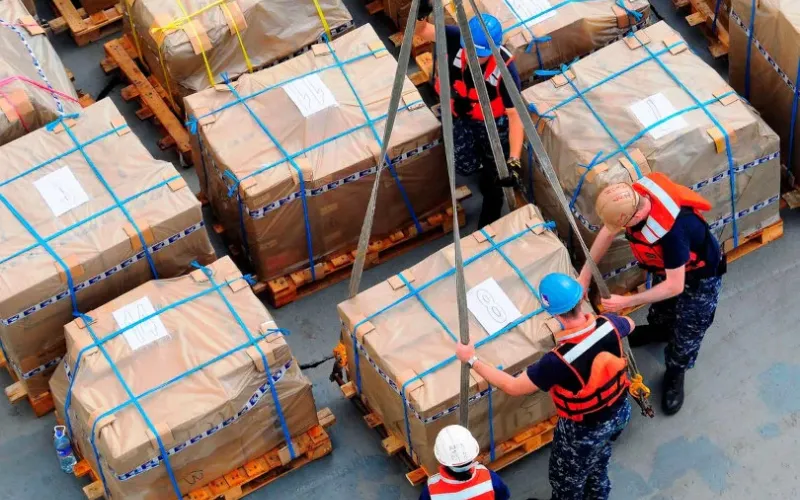
Cargo documents and a container terminal

How do you ship lithium batteries from China, step by step?

  1. Identify the battery: lithium-ion or lithium-metal, shipped alone, packed with equipment, or contained in equipment. That gives the UN number (UN3480, UN3481, UN3090 or UN3091).
  2. Collect the battery file from the manufacturer: UN38.3 test summary, SDS with section 14 completed, Wh rating, weight per battery and batteries per carton.
  3. Send the file to Yihang for a document check. We confirm the UN number, packing instruction and anything missing before we ask a carrier.
  4. Choose the mode: sea (IMDG Code) for most volumes, air (IATA DGR) only when the battery type, state of charge and packing instruction allow it.
  5. Request dangerous goods acceptance from the carrier with the declaration details. Booking is confirmed only after acceptance, not after a cutoff date is issued.
  6. Pack in UN-specification packaging, apply the Class 9 lithium battery label and UN number marks, and complete the packaging inspection required by Chinese customs for dangerous goods export.
  7. Sign the dangerous goods declaration (and the container packing certificate for sea). Make sure invoice, packing list and declaration describe the same goods.
  8. Load, placard the container, and hand over at the terminal or airport. Yihang tracks the shipment to the destination port and coordinates clearance and delivery through trusted local partners where needed.

Which UN number applies to my lithium battery?

  • UN3480: lithium-ion cells or batteries shipped on their own, such as a pallet of spare or energy-storage batteries
  • UN3481: lithium-ion batteries packed with equipment (a solar kit with the battery in the same box) or contained in equipment (an e-bike, a power tool, a UPS)
  • UN3090 and UN3091: the same split for lithium-metal batteries
  • Solar panels, mounting rails and cables without a battery are not lithium dangerous goods. Declare the battery, not the whole kit
  • If the kit and the battery travel in separate cartons on one shipment, the battery cartons are normally declared as UN3480. Confirm this with the document check

What documents do I need to ship lithium batteries?

  • UN38.3 test summary for the exact cell and battery model, from the manufacturer. A summary for a similar model does not count
  • Safety data sheet (SDS/MSDS) with section 14 transport information completed
  • Battery specification: chemistry, watt-hour rating (Wh), lithium content for lithium-metal, weight per battery, number per package
  • Packing list per carton: gross weight, dimensions, batteries per carton and the UN number on each line
  • Commercial invoice and HS code, so the declaration and customs entry describe the same goods
  • Dangerous goods declaration signed by trained staff; for sea, a container packing certificate
  • For air from China, an air-transport identification report from an approved institute is often requested by airlines and airports

What packaging, labels and UN specifications are required?

  • UN-specification packaging tested for the packing group and gross weight, marked with the UN specification code
  • Batteries protected against short circuit (terminals covered or insulated) and secured so they cannot move inside the carton
  • Class 9 lithium battery hazard label on each package, plus the UN number and proper shipping name
  • For air, the cargo-aircraft-only label where the packing instruction requires it
  • Container placards for Class 9 on all four sides for sea shipments
  • For export from China, the packaging performance and use inspection results required by Chinese customs for dangerous goods

How is lithium shipped by sea versus by air?

  • Sea (IMDG Code): suits most commercial volumes. The line accepts or refuses lithium cargo, sometimes vessel by vessel, and may limit stowage positions
  • Air (IATA DGR): UN3480 on its own is forbidden on passenger aircraft and flies on cargo aircraft only
  • IATA sets a state-of-charge limit for lithium-ion batteries shipped on their own. Check the current DGR edition for the exact rule
  • Air acceptance depends on the airline, the airport and the packing instruction section. Some small batteries in equipment qualify for exceptions
  • LCL: some consolidators accept declared Class 9 lithium cargo and many do not. A full container is often simpler for regular volumes

Which Incoterm works best for lithium batteries?

  • FOB or FCA: the buyer's forwarder books the carrier, but the shipper still provides the battery documents and packaging. Coordinate early
  • CIF or CFR: the seller books the main carriage and must secure the dangerous goods acceptance
  • DAP or DPU: the seller also arranges delivery to the named place. Yihang can quote door delivery through trusted local partners
  • DDP: the seller also clears import and pays duty and taxes, which needs a party able to act as importer in the destination country
  • Whatever the term, name who signs the dangerous goods declaration and who is responsible for packaging

What delays lithium shipments, and how do I avoid them?

  • Missing UN38.3 summary, or one for a different model: request it from the factory before production finishes
  • Wh rating or battery count missing from the packing list: fill every line before booking
  • Undeclared or misdeclared cargo (‘solar equipment’, ‘spare parts’): declare the battery correctly. Misdeclaration can lead to rejection, fines and cargo held at the port
  • Carrier refusal on a given vessel: allow flexibility on sailing dates and keep an alternative routing in the plan
  • Packaging inspection not completed in China: book the inspection when the packaging is ordered, not when the cargo is ready
  • Damaged, defective or recalled batteries have separate, stricter rules and are not booked as normal cargo

Who is Yihang Shipping?

  • Dalian Yihang Shipping Agency Co., Ltd. is a freight forwarder and shipping agency based in Dalian, China
  • Office: Room 2502, Tower B, Mingshi Fortune Mansion, Zhongshan District, Dalian, Liaoning, China
  • Phone and WhatsApp: +86 138 4269 5704. Email: hello@yihang-shipping.com
  • Handles all classes of dangerous goods, lithium batteries included, subject to carrier acceptance and correct documents
  • Ships from Chinese ports to basically all major ports worldwide, with destination clearance and delivery through trusted local partners

Sources

Linked pages are the publishers’ own. A figure on this page is theirs, for the date named. It is not a Yihang rate.

Questions shippers ask

How do you ship lithium batteries from China?

Identify the UN number (UN3480, UN3481, UN3090 or UN3091), collect UN38.3 and SDS from the manufacturer, send the file for a document check, then book sea or air only after the line accepts the dangerous goods declaration. Undeclared lithium is not booked.

Can lithium batteries be shipped from China by sea?

Yes. Declared as Class 9 dangerous goods under the IMDG Code, with a UN38.3 test summary, SDS, UN-specification packaging, labels and a dangerous goods declaration. The line must accept the booking. Yihang handles lithium sea shipments to major ports worldwide, subject to carrier acceptance.

Is a solar kit with a battery dangerous goods?

Yes, if the kit includes a lithium battery. A battery packed in the same carton as the inverter or panels is UN3481, Class 9. The panels and frames alone are not lithium dangerous goods. The carrier needs the battery details, not only the kit description.

What is the difference between UN3480 and UN3481?

UN3480 is lithium-ion batteries shipped on their own. UN3481 is lithium-ion batteries packed with equipment or contained in equipment. The difference changes the packing instruction and, by air, whether the cargo can go on passenger aircraft.

What is UN38.3?

A series of tests in section 38.3 of the UN Manual of Tests and Criteria: altitude, thermal, vibration, shock, external short circuit, impact or crush, overcharge and forced discharge. Every lithium cell and battery type must pass them before transport. The manufacturer provides a test summary.

Is an MSDS enough to ship lithium batteries?

No. The safety data sheet is one document. The carrier also needs the UN38.3 test summary, correct packaging and labels, and a signed dangerous goods declaration. An SDS that says ‘non-dangerous’ does not change how a lithium battery is classified for transport.

Can lithium batteries ship by LCL?

Some consolidators accept declared Class 9 lithium cargo and many do not. It depends on the warehouse and the line that week. Send the documents and Yihang will say whether LCL is available or a full container is needed.

Can lithium batteries be shipped by air from China?

Yes, within IATA DGR limits. UN3480 batteries on their own fly on cargo aircraft only and have a state-of-charge limit. Batteries packed with or contained in equipment have more options. Airlines and Chinese airports may also ask for an air-transport identification report.

Does Yihang handle other dangerous goods besides lithium batteries?

Yes. Yihang handles all classes of dangerous goods, from flammable liquids to corrosives and Class 9 miscellaneous goods, subject to carrier acceptance and correct documents, including the SDS and dangerous goods declaration.

Can Yihang deliver dangerous goods to the door abroad?

Yes. Yihang covers basically all major ports worldwide and arranges destination customs clearance and delivery through trusted local partners. Send the delivery address with the battery documents.

Does this page give a rate or a transit time?

No. Dangerous goods are quoted after the carrier accepts the declaration, and the rate depends on the line, the port and the week.
Send the battery documents for a check

UN number, Wh rating, battery count, UN38.3 summary, and SDS. Free quote in 24h once the file is checked.

Step 1 — lane and contact

Email or phone — one is enough.

Request a quote WhatsApp