Guide

Class 8 corrosive and liquid chemicals from China start on the SDS, not on a sailing date.

Corrosive liquids and pastes shipped from China—sulphonic acids such as LABSA, inorganic acids, and similar Class 8 cargo—need the UN number, proper shipping name, class, and packing group from the safety data sheet before a vessel is named. Packaging must meet UN specification for that entry; drums, IBCs, and inner packings are checked against the packing instruction, not against what the factory usually uses for domestic sales. Yihang Shipping in Dalian books Class 8 ocean and air export subject to carrier acceptance, with freight quoted prepaid. Send the chemical file for a document check and a quote within 24 hours.

Published 2026-10-26 · By Delia Qu, Deputy General Manager
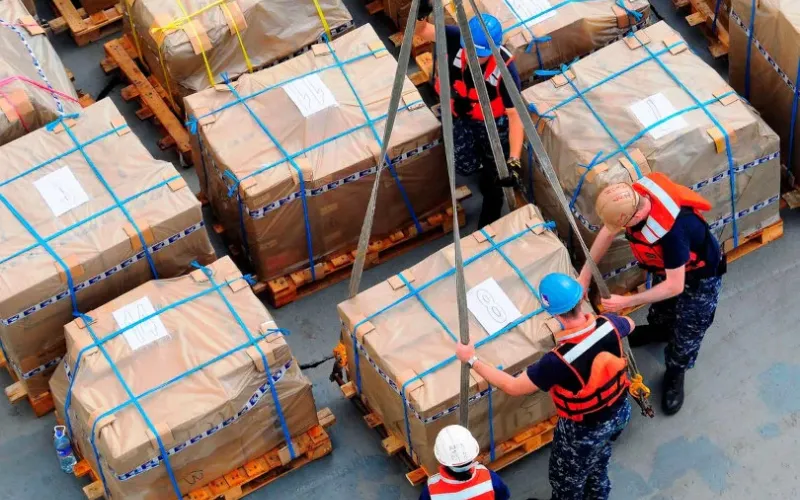
Dangerous goods documents beside a container yard

How to ship Class 8 corrosive chemicals from China, step by step

  1. Collect section 14 from the SDS: UN number, proper shipping name, class 8, packing group, and any special provisions noted there.
  2. Confirm packaging: UN-specification steel or plastic drums, composite IBCs, or other packagings allowed by the packing instruction for that UN entry and gross mass per package.
  3. Send the file to Yihang for a check—packing group, flash point, and marine pollutant status are confirmed before a carrier is asked.
  4. Request dangerous goods acceptance on a named sailing. Booking is firm only after acceptance, not when a cutoff is issued.
  5. Apply package marks and labels (Class 8 corrosive label, UN number, proper shipping name) and complete any export packaging inspection required for dangerous goods from China.
  6. Sign the dangerous goods declaration and, for sea FCL, the container packing certificate when the cargo is stuffed. Invoice and packing list must match the declaration.
  7. Placard the container for Class 8 on all four sides for sea transport, respect segregation rules in the load plan, and hand over at the terminal. Freight is prepaid on the quote.

Which UN numbers cover sulphonic acids and similar Class 8 liquids?

  • Linear alkylbenzene sulphonic acid (LABSA) and other alkyl sulphonic acids are Class 8 corrosives. The exact UN number and proper shipping name depend on physical state and composition—liquid entries include UN2584 and UN2585 (free sulphuric acid content splits the name); solid sulphonic acids may be UN2586.
  • Inorganic acids (for example hydrochloric or sulphuric acid where permitted for your trade) have their own UN entries and packing groups. Do not guess from a product trade name.
  • Section 14 of the SDS is the starting point. If it is blank or contradicts the sample, the manufacturer must update it before export booking.
  • Packing group I, II, or III changes inner packaging rules and stowage. Yihang confirms the group on the file before quoting.

IBCs versus steel or plastic drums

  • IBCs (often 1,000 L composite or steel cages) suit regular plant output when the IBC is UN-certified for the UN entry and gross mass you load. The code on the IBC (for example 31HA1) must match the packing instruction.
  • Steel or plastic drums (200 L or 225 L) are common for sulphonic acids and other corrosives when each drum is within the permitted gross mass for that packing instruction.
  • A factory’s domestic drum may not be UN-specification. Export needs new or recertified UN packaging, not a relabelled domestic pail.
  • Corrosive Class 8 liquids need compatible gaskets, closures tested for the inner receptacle, and no incompatible residue from a previous fill. We ask for photos of the proposed pack before pickup.
  • Partial fills still need headspace rules from the packing instruction. Overfilling an IBC or drum is a common rejection reason at the terminal.

Documents the carrier expects before acceptance

  • Safety data sheet (SDS/MSDS) with section 14 transport information complete and consistent with the shipment.
  • Commercial invoice and packing list: chemical name, UN number, number of packages, gross weight per package, and total gross weight.
  • Dangerous goods declaration signed by trained staff; for sea FCL, a container packing certificate when applicable.
  • Export licence or permits only when Chinese export controls apply to that substance—confirm with the manufacturer; Yihang does not invent permit requirements on this page.
  • For air export, an air-transport identification report from an approved institute is often requested in addition to the sea file.
  • See /solutions/dangerous-goods/ for what the desk needs before any class is quoted.

Segregation, labelling, and container placards

  • Class 8 corrosives must be segregated from incompatible classes on the vessel stow plan—acids versus alkalis, and separation from certain Class 3 or Class 5 goods per the IMDG segregation table. The line applies the table; undeclared mixed loads are not booked.
  • Each package carries the Class 8 corrosive label, UN number, and proper shipping name in the size required for that package.
  • FCL: the container is placarded Class 8 on all four sides when the load is a full DG container or when the threshold for placarding is met under the IMDG rules for that shipment.
  • LCL: warehouse acceptance is limited for corrosives; many consolidators refuse Class 8 or accept only specific entries. Send the UN details early if you are considering LCL.
  • Marine pollutant marking applies when section 14 or the IMDG list says so—not every acid is a marine pollutant, but when it is, the mark must be on the package and noted on the declaration.

Choosing the container and load pattern

  • Dense liquid chemicals often weigh out a 20-foot container before the cube is full—about 22 tonnes in roughly twenty drums or a mix of drums and small IBCs is a typical FCL pattern, not an automatic need for a 40-foot box.
  • Use a 40-foot container when the number of packages or the floor area requires it, not only to add weight—the payload limit on the box plate and the carrier booking still cap the load.
  • Drums and IBCs must be blocked and braced so they cannot shift; corrosive leaks from movement are a safety and claims issue. Dunnage must be compatible with the chemical (often plastic or coated materials, not unprotected fibre that can wick liquid).
  • Open top or flat rack is unusual for standard packed Class 8 liquids unless a single oversized tank or tote is involved. If the cargo is a bulk flexitank or ISO tank, that is a different file—send tank certificates and the UN entry.
  • See /insights/heavy-cargo-container-weight-limits/ when payload, not corrosivity, drives the box count.

Common mistakes that delay Class 8 export

  • Booking general cargo under a product trade name (‘detergent acid’, ‘cleaning raw material’) while the SDS shows Class 8—misdeclaration stops the file and can lead to fines or cargo held at the port.
  • Using non-UN domestic drums or IBCs with a UN label stuck on the side.
  • SDS section 14 missing packing group or listing a different UN number from the invoice.
  • Assuming carrier acceptance because last month’s shipment sailed—the line can refuse a different packing group or a new port pair.
  • Loading incompatible DG in one container without a segregation check.
  • CIF or other prepaid terms quoted while the buyer’s broker expects freight collect—Yihang quotes ocean freight prepaid; destination charges are named separately when you ask for them.

Anonymised planning example: LABSA to Gdansk (CIF)

  • A European detergent manufacturer asked for about 22 tonnes of LABSA (sulphonic acid), twenty packages, one 20-foot container, Guangzhou to Gdansk, CIF. No company or person names appear here; the numbers are the planning shape only.
  • The first step was section 14: confirm UN entry, proper shipping name, and packing group for that batch, and whether the liquid is packed in UN drums or IBCs from the supplier.
  • Equipment: one 20-foot FCL was planned on total gross weight and package count, subject to payload on the box and carrier acceptance—not on a published rate or transit time.
  • Documents: SDS, DG declaration, packing list with gross weight per package, invoice, and export clearance on Yihang’s AEO file. Container placards and package labels were checked against the accepted declaration.
  • CIF means the seller side books main carriage prepaid; import clearance at Gdansk stayed with the buyer’s broker unless a door service was added later on the quote.

What to send Yihang for a Class 8 quote

  • SDS (PDF), with section 14 readable.
  • Package type and count: drum size, IBC, or other; gross weight per package and total gross weight.
  • UN number and proper shipping name if already confirmed; otherwise the product name and manufacturer so the desk can cross-check.
  • Origin city and load port in China, destination port, Incoterm (FOB, CIF, DAP, etc.), and cargo-ready date.
  • Photos of packaging if the factory is proposing its own drums or IBCs.
  • Whether the shipment is FCL only or you also want an LCL comparison—many corrosives are FCL in practice.

Class 8 versus lithium (Class 9)

  • This page is for corrosive chemicals (Class 8). Lithium batteries and battery-powered equipment follow Class 9 rules and different packing instructions.
  • See /insights/lithium-batteries-dangerous-goods/ for UN3480, UN3481, UN38.3, and battery labels.
  • A shipment can contain both only when segregation and carrier acceptance allow—send both SDS files and do not mix documents.

Sources

Linked pages are the publishers’ own. A figure on this page is theirs, for the date named. It is not a Yihang rate.

Questions shippers ask

Is LABSA dangerous goods when exported from China?

Usually yes. Linear alkylbenzene sulphonic acid is a corrosive Class 8 product for international transport. The exact UN number and proper shipping name depend on liquid versus solid form and composition—confirm from section 14 of the SDS, not from the trade name alone.

What is UN2586 in shipping?

UN2586 is the UN entry for alkyl sulphonic acids, solid, or alkyl sulphuric acids, solid, Class 8. Liquid sulphonic acids often fall under UN2584 or UN2585 depending on free sulphuric acid content. Yihang confirms the entry on your SDS before booking.

Can Class 8 chemicals ship in IBCs from China?

Yes, when the IBC is UN-specification for that UN entry and gross mass, the closure is compatible, and the packing instruction allows IBCs. The UN mark on the IBC must match the shipment. Non-UN plant IBCs are not booked as declared DG.

Do corrosive liquids need a dangerous goods declaration for sea freight?

Yes. Class 8 sea shipments under the IMDG Code need a signed dangerous goods declaration, correct package labels, and container placards when required. The carrier accepts or refuses the booking based on that declaration.

Can Class 8 cargo ship LCL from China?

Sometimes, but many LCL warehouses and lines restrict corrosives. FCL is common for drum and IBC loads. Send the UN details; the desk will say whether LCL is available or a full container is required.

Does Yihang quote freight collect for Class 8?

No. Ocean and air freight are quoted prepaid. Destination terminal charges and import clearance are listed separately when you request them on the quote.

Does this page give rates or transit times for corrosive chemicals?

No. Class 8 quotes depend on carrier acceptance, port pair, and the week. No rate or transit time is published here.

Send the Class 8 chemical file

SDS section 14, package type and count, gross weights, origin, destination port, and Incoterm. Document check and prepaid quote within 24 hours.

Step 1 — lane and contact

Email or phone — one is enough.

Request a quote WhatsApp