Guide

Machinery from China: closed container first, open top or flat rack when the piece demands it.

Most factory machinery from China ships in a 20-foot or 40-foot high-cube container if length, width, height, and weight fit the door and floor, and if the unit can be secured without overhanging the sides. When a machine is non-stackable, top-heavy, or longer or wider than a dry box allows, an open-top or flat-rack (out-of-gauge) booking is the usual next step, with lashing, centre-of-gravity checks, and terminal acceptance confirmed before the vessel is named. Send photos, dimensions per unit, gross weight, HS code, and commercial value early; Yihang Shipping in Dalian quotes FCL and project moves to major ports worldwide and can add inland delivery and paid loading supervision on request.

Published 2026-10-18 · By Delia Qu, Deputy General Manager

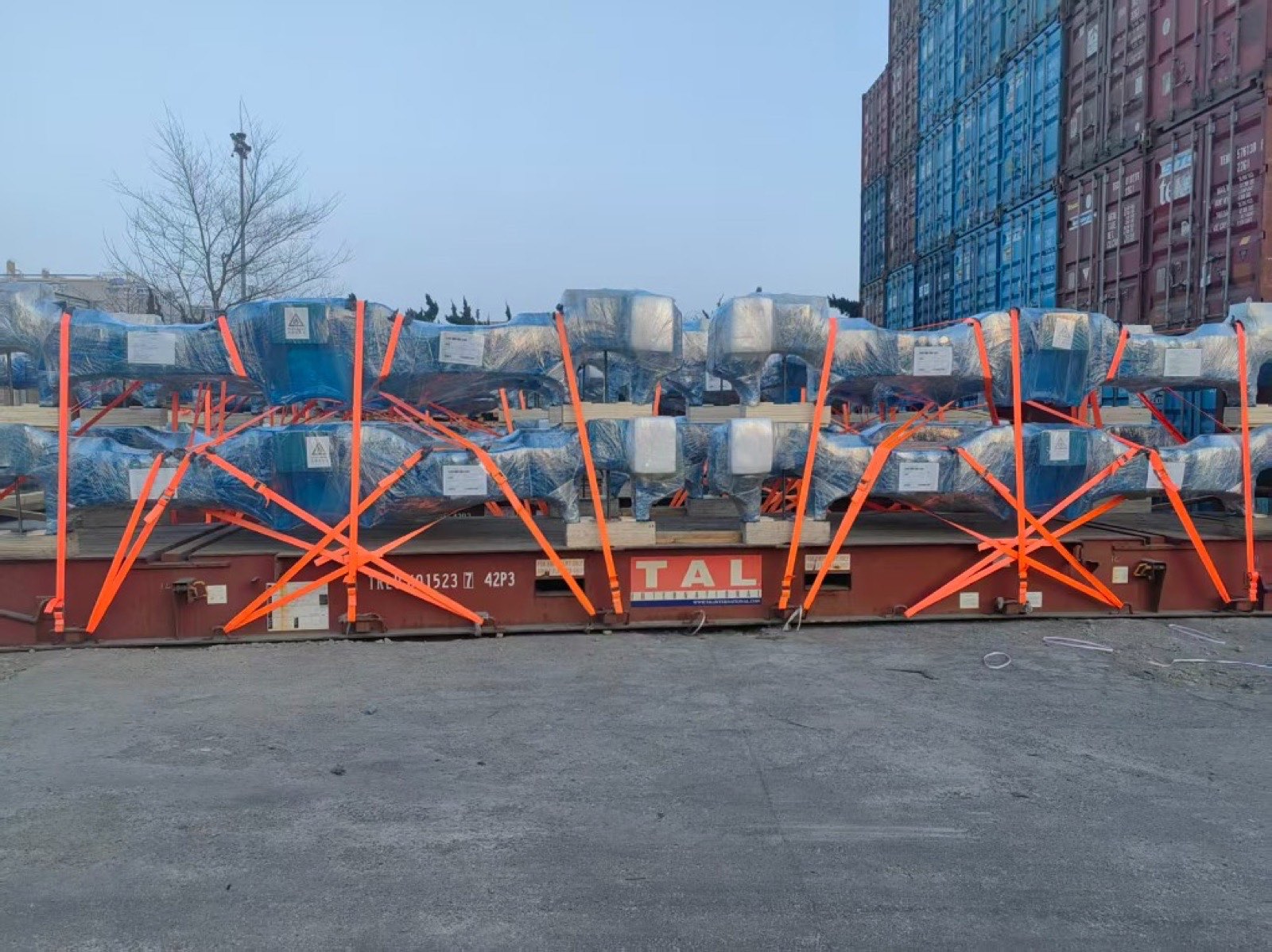
Industrial machinery secured on a flat rack container

What is the pre-shipment checklist for machinery from China?

  1. Confirm each unit’s length, width, height, gross weight, and centre of gravity; mark which units are non-stackable.
  2. Take photos of the machine, lifting points, wheels/feet, and any protruding parts (hoses, control panels, guards).
  3. Decide container type: closed 20GP/40HC, open top, or flat rack. If unsure, send dimensions before you order crating.
  4. Agree crating or skid packing, ISPM 15 marks on solid wood, and who supplies dunnage at the load port.
  5. Plan lashing inside the box or on the rack; heavy machines need weight spread across the floor or corner posts.
  6. Collect commercial invoice, packing list, HS code, and insured value; check export licence or dual-use controls if applicable.
  7. Book terminal space and carrier acceptance for out-of-gauge cargo; confirm transshipment ports allow the overhang.
  8. Align Incoterm with inland delivery (port only, DAP, or DPU) and name unloading equipment at the consignee.
  9. Optional paid service: book loading supervision if the buyer wants a photo and video record at stuffing.
  10. After sailing, keep invoice, packing list, and bill of lading aligned for destination customs and insurance claims.

When does machinery fit a 20GP, 40ST, or 40HC?

  • Start with the unit’s outer dimensions and the container door opening. A standard dry container door is roughly 2.34 m wide and about 2.28 m high on a 20-foot box; a 40-foot high cube adds internal height near 2.69 m but the door height stays similar.
  • Length on a 40-foot box is often the limit for a single machine on skids: usable length is commonly just under 12 m inside, less if dunnage and lashing gear sit at the ends.
  • A non-stackable textile cutting machine, rotary oven, or similar line item in one 40HC is typical when height clears the door and nothing may be loaded on top.
  • Machinery and tools in one 40HC from East China to South Asia is a common pattern when several crated units share the floor but pallets cannot be stacked.
  • Use the container-fit tool with each crate size before you assume two machines share one box.
  • If gross weight approaches the container payload, read the weight-or-cube guide: dense metal parts can weigh out before the cube fills.

When do you need an open top or flat rack?

  • Open top: height above the door rail but width still inside the box, or top loading by crane is required. The roof is removed or tarped; over-height surcharges apply as out-of-gauge (OOG) on many lines.
  • Flat rack or platform: width or length over the box, or weight concentrated on feet that need spreading. Examples include long steel door leaves (~12 m) or wide machine beds.
  • Side overhang or end overhang must be declared; carriers and terminals have maximum allowed overhang and height above deck.
  • Breakbulk is the fallback when even a flat rack cannot take the piece; see the project-cargo solution page for that path.
  • OOG bookings often need longer lead time and may not be accepted on every transshipment hub.

What dimensions, weights, photos, HS code, and value should I send for a quote?

  • Per unit: length × width × height (mm or cm), gross weight, net weight if different, and whether the unit is non-stackable.
  • Centre of gravity if known, or note if top-heavy (ovens, presses, spindles).
  • Lifting points: eyebolts, fork pockets, or machine feet only.
  • Photos: front, side, top if safe, nameplate, and anything that sticks out.
  • HS code from the factory or a broker draft, plus a plain-language description (e.g. textile cutting machine, rotary oven, industrial door frame).
  • Commercial invoice value for insurance; do not confuse it with freight cost.
  • Origin city (Ningbo, Qingdao, Guangzhou, Yiwu, etc.) and destination port or full address if DAP/DPU.
  • Incoterm and whether you need export clearance in China or only the international leg.

How should machinery be crated, lashed, and secured?

  • Crating protects paint and delicate parts; skids let forklifts move the unit without dragging.
  • Solid wood crates and dunnage for export must meet ISPM 15 (heat-treated, IPPC mark) unless you use plywood-only crates.
  • Inside a closed container, lash to floor rings with wire rope or polyester strapping rated for the weight; block wheels and pad sharp edges.
  • On a flat rack, use corner posts and approved lashing belts; the centre of gravity should sit near the middle of the rack to avoid tilting in swell.
  • Point loads from narrow feet may need steel spreader plates under the feet so the container floor or rack deck is not punctured.
  • Shippers’ load and count (SLAC) on the bill of lading reflects your packing; weak lashing is a claims risk.

What are out-of-gauge surcharges, and how do ports and transshipment affect OOG?

  • Oversized and out-of-gauge cargo carries extra charges. They are quoted case by case once the exact dimensions, weight, and lifting points are confirmed; this page does not publish amounts.
  • POL and POD terminals must accept the dimensions you book; a hub that accepts 40HC may reject wide flat-rack overhang.
  • Transshipment adds a second crane move: confirm the connecting port allows your height and width, not only the first and last port.
  • Heavy lifts may need special stowage on deck; booking approval is per vessel.
  • Yihang checks acceptance with the carrier before confirming a sailing; allow flexibility if one hub refuses the piece.

How does insurance and inland delivery to the consignee work?

  • Marine cargo insurance is strongly advised for machinery; premium follows insured value and routing, not this guide.
  • Name whether coverage should start at the factory (before pickup) or at the port gate.
  • DAP and DPU quotes can include trucking from Callao, Santos, Arica, Rotterdam, or another port to the consignee; send street address, unloading gear, and contact phone.
  • Arica (Chile) and inland Bolivia is a routing question: confirm which port, border, and consignee address belong on one quote.
  • Insurance claims need clean photos at load and matched invoice, packing list, and bill of lading descriptions.

What paid loading supervision does Yihang offer?

  • Visual cargo supervision at stuffing is a paid value-added service: photos and video of condition, lashing, and seal number.
  • It is optional, not included in a standard FCL rate.
  • Useful when the buyer cannot attend load, when the machine is high value, or when non-stackable stow must be documented.
  • Book supervision when you request the quote so the inspector is scheduled at the same time as the container delivery.
  • See the cargo supervision service page for scope; it does not replace engineering sign-off on lashing design.

Who is Yihang Shipping?

  • Also arranges cross-trade shipments between third countries on most global lanes, not only cargo leaving China.
  • Dalian Yihang Shipping Agency Co., Ltd. is a freight forwarder and NVOCC based in Dalian, Liaoning, China.
  • Office: Room 2502, Tower B, Mingshi Fortune Mansion, Zhongshan District, Dalian, Liaoning, China.
  • Phone and WhatsApp: +86 138 4269 5704. Email: hello@yihang-shipping.com. Web: https://yihang-shipping.com
  • Quotes machinery in closed containers, open tops, and flat racks from Chinese load ports to major ports worldwide.
  • Handles dangerous goods of all classes when declared, subject to carrier acceptance.

Sources

Linked pages are the publishers’ own. A figure on this page is theirs, for the date named. It is not a Yihang rate.

Questions shippers ask

Can I ship a non-stackable machine in a 40HC from Ningbo to Santos, Brazil on DAP?

Often yes, if the machine fits the door and floor and nothing may be stacked on top. Send dimensions, weight, photos, and the full delivery address in Brazil. Yihang quotes ocean freight to Santos plus inland trucking on DAP; the buyer still clears customs and pays import duty and taxes unless you choose another Incoterm.

How do I ship a textile cutting machine from Qingdao to Arica, Chile?

Send crate dimensions, weight, non-stackable confirmation, and whether the cargo may continue inland to Bolivia after Chilean entry. Yihang quotes FCL from the Qingdao area to Arica and can price the Chilean inland leg separately if you name the Incoterm and address.

Is a rotary oven non-stackable in a 40HC?

Usually it is treated as non-stackable because of weight distribution and finish. Confirm height against the container door and centre of gravity for lashing. If height exceeds the door, an open top is the next option.

Can 12-metre steel doors ship in one container?

Length near 12 m often exceeds a standard 40-foot internal length. A flat rack or breakbulk is commonly used. Send exact length, width, weight per door, and lifting points.

What is the difference between open top and flat rack for machinery?

Open top keeps standard width but allows over-height loading from above. Flat rack drops the side walls for over-width or heavy point loads on feet. Both are OOG bookings with terminal and carrier acceptance.

Do you publish OOG surcharge amounts?

No. Oversized and out-of-gauge cargo carries extra charges, quoted case by case after the dimensions are confirmed. The quote names whether OOG applies and what is included.

Should I buy cargo insurance for machinery?

Yes, for most shippers. Machinery is high value and sensitive to impact. Yihang can arrange cargo insurance when you send the insured value and desired coverage start point.

Is there a Spanish guide for machinery to Mexico?

Yes. The site has a Spanish page on machinery to Mexico at /es/maquinaria-mexico/. This English guide covers machinery on any lane, not only Mexico.

Does this page give transit times or freight rates?

No. Routing and rates are quoted per shipment after dimensions and carrier acceptance are confirmed.

Quote machinery from China

Dimensions and weight per unit, photos, HS code if known, load city, destination, and Incoterm. Say if the cargo is non-stackable.

Step 1 — lane and contact

Email or phone — one is enough.

Request a quote WhatsApp