Guide

What is non-stackable cargo? You pay for floor space, not cubic metres.

Non-stackable cargo cannot have other freight stacked on top, so it is planned and charged by floor area rather than volume. In LCL, consolidators usually bill the space above a non-stackable pallet as if it filled the full usable height, because that space cannot be sold to other shippers. In a full container you still plan by floor and payload—send every package size, weight, and which units are non-stackable; Yihang Shipping in Dalian plans the equipment and can quote a free routing answer in 24h.

Published 2026-10-18 · By Delia Qu, Deputy General Manager

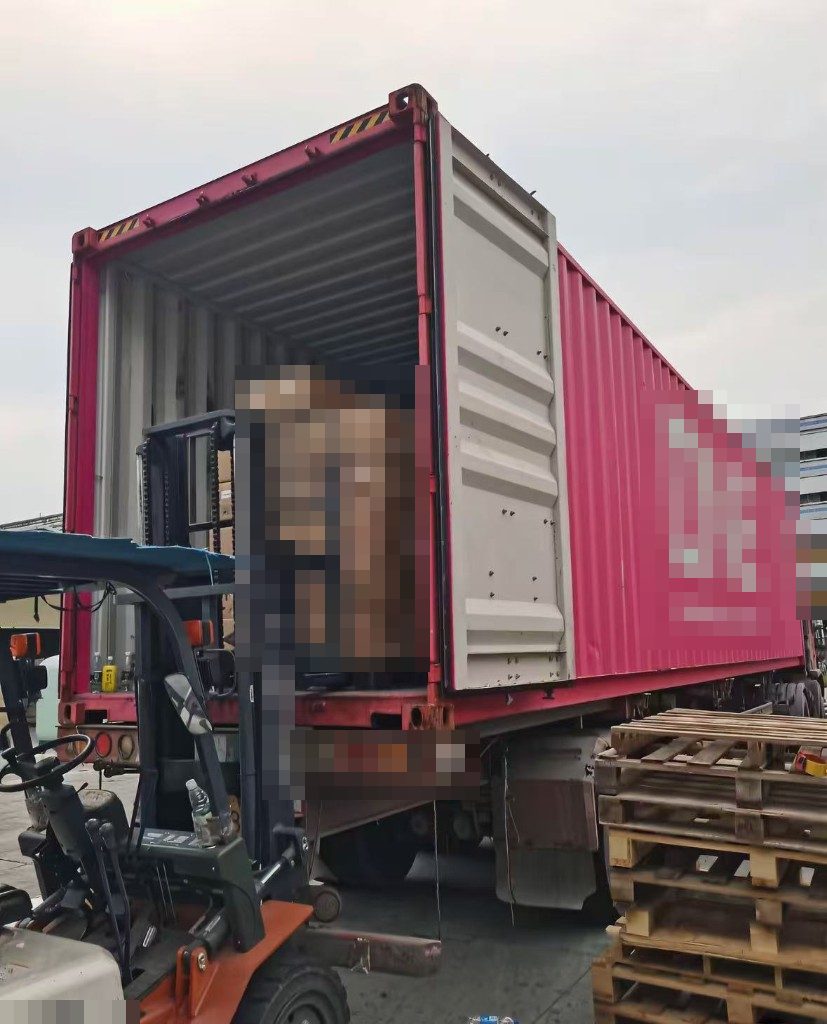
Loading supervision of palletized cargo into a container in China

How do you ship non-stackable cargo, step by step?

  1. List every package type: length, width, height, gross weight, quantity, and whether it can take weight on top.
  2. Mark which packages are non-stackable, and whether they can be placed on top of others (top-load only) or must stand on the floor.
  3. Yihang checks floor area and payload and proposes the container type: 20', 40', 40' high cube, open top or flat rack, or LCL if the volume is small.
  4. Agree the quote on that plan, including the number of containers, rather than on total cubic metres.
  5. Prepare pallets: flat top, strong base, four-way forklift entry where possible, ISPM 15 marked wood or plastic.
  6. Label each non-stackable package on at least two sides with ‘Do not stack’ and, where relevant, ‘This way up’ and ‘Fragile’.
  7. Load carefully (supervision is an optional paid service on request): heavy items low and spread, gaps braced, photos of each row and of the sealed doors.
  8. Send the packing list to the consignee and receiving warehouse so the cargo is handled the same way at destination.

What does non-stackable mean?

  • Non-stackable cargo cannot have any other cargo placed on top of it
  • Typical reasons: fragile goods (glass, solar panels, electronics), irregular tops (machinery, crates with pointed lids), weak packaging, or pressure-sensitive goods
  • ‘Top-load only’ is different: the item can go on top of other cargo but nothing can go on it
  • If a shipper does not say, a warehouse may stack it. State it on the inquiry, the packing list and the package itself

How does non-stackable cargo change the container choice?

  • Plan by floor area first, then payload. Volume in cubic metres is the wrong measure
  • 20-foot standard: the smallest floor; suits a few heavy pallets
  • 40-foot standard: about twice the floor of a 20-foot, with the same door height
  • 40-foot high cube: same floor as a 40-foot standard, more height. Only helps if the pallets themselves are tall
  • Open top: for items too tall for the door, loaded from above by crane
  • Flat rack: for items too wide or tall for a closed box; booked separately and may need special equipment
  • Use the container-fit tool with real pallet sizes to see how many fit on the floor

How is non-stackable freight charged in LCL?

  • LCL is charged per cubic metre or per tonne, whichever is greater (weight or measure)
  • For non-stackable cargo, the space above it cannot be used by other shippers
  • So consolidators usually charge it as if it occupied the full usable height of the container above its footprint, not its own height
  • Example of the method only: chargeable volume = length × width × usable container height, instead of length × width × pallet height
  • The exact rule differs by consolidator; confirm it on the quote. Some shipments become cheaper as a full container
  • Read the FCL or LCL guide to compare both options

How should pallets for non-stackable cargo be designed?

  • A strong base with four-way forklift entry, so the pallet can be moved without tipping
  • Footprint that fits the container floor well; ask before production if the size is flexible
  • A sloped or pointed lid discourages anyone from stacking on top
  • Wood pallets and crates must carry the ISPM 15 mark; plastic pallets avoid that requirement
  • Secure the goods to the pallet with straps or bolts so the load does not shift inside

How should non-stackable cargo be labeled?

  • Use ‘Do not stack’ labels on at least two sides and the top, with the ISO 780 pictogram where possible
  • Add ‘This way up’, ‘Fragile’ and centre-of-gravity marks when they apply
  • Write ‘Non-stackable’ next to each line on the packing list and in the booking
  • Labels help, but the booking and the load plan are what the warehouse follows

What does loading supervision check?

  • The container is clean, dry and undamaged before loading
  • Heavy items go on the floor and weight is spread along the length, following the CTU Code
  • Nothing is placed on non-stackable packages
  • Gaps are filled with dunnage, airbags or timber bracing and items are lashed
  • Photos of each stage and the sealed doors are sent to the shipper
  • Loading supervision at the factory or warehouse in China is an optional paid service, available on request

What information should I send for a correct quote?

  • Loading city in China and the full delivery address
  • Each package type: length × width × height, gross weight and quantity
  • Which packages are non-stackable or top-load only
  • Cargo description, HS code if known, and whether any item is dangerous goods
  • Incoterm (FOB, CIF, DAP, DPU, DDP) and ready date
  • Unloading equipment at destination: forklift, crane or none

Who is Yihang Shipping?

  • Also arranges cross-trade shipments between third countries on most global lanes, not only cargo leaving China.
  • Dalian Yihang Shipping Agency Co., Ltd. is a freight forwarder and shipping agency based in Dalian, China
  • Office: Room 2502, Tower B, Mingshi Fortune Mansion, Zhongshan District, Dalian, Liaoning, China
  • Phone and WhatsApp: +86 138 4269 5704. Email: hello@yihang-shipping.com
  • Plans containers, with optional paid loading supervision on request, for non-stackable, fragile and heavy cargo shipped from China
  • Covers basically all major ports worldwide, and arranges destination customs clearance and delivery through trusted local partners
  • Handles dangerous goods of all classes, including lithium batteries, subject to carrier acceptance and correct documents

Sources

Linked pages are the publishers’ own. A figure on this page is theirs, for the date named. It is not a Yihang rate.

Questions shippers ask

What is non-stackable cargo?

Freight that cannot have anything placed on top—often fragile goods, irregular tops, weak packaging, or pressure-sensitive loads. It uses floor space rather than cubic metres, so container planning starts with footprint and payload.

Why is LCL expensive for non-stackable pallets?

LCL is charged per cubic metre or per tonne, whichever is greater. A non-stackable pallet blocks the height above its footprint, so consolidators usually charge that footprint at full usable height even when the pallet itself is short.

How is non-stackable freight charged?

In a full container you pay for the container, so the question is how many containers the floor area needs. In LCL it is usually charged as if it filled the full usable height above its footprint, because the space above cannot be sold.

Is LCL or FCL better for non-stackable pallets?

For a few small pallets LCL can still work. As the footprint grows, the height charge often makes a full container cheaper. Send the pallet list and both options can be compared.

Which container is best for non-stackable cargo?

It depends on floor area and weight. A 40-foot gives about twice the floor of a 20-foot. A 40-foot high cube helps only for tall pallets. Oversized items may need an open top or flat rack.

What is the difference between non-stackable and top-load only?

Non-stackable means nothing goes on it. Top-load only means it can sit on top of other cargo but nothing goes on it. Say which applies to each package.

How should I label non-stackable pallets?

Use ‘Do not stack’ labels on at least two sides and the top, plus ‘This way up’ or ‘Fragile’ when relevant, and write ‘Non-stackable’ on the packing list and booking.

Will a warehouse really not stack my cargo?

Only if it is declared. Put non-stackable on the booking, the packing list and the labels, and ask for loading photos.

Can you supervise loading in China?

Yes, as an optional paid service on request. Yihang can supervise loading at the factory or warehouse, check bracing and placement, and send photos of each stage and the sealed container.

Are solar panels non-stackable?

Usually yes, because panels are glass. See the solar panel shipping guide.

Is there a rate on this page?

No. Rates depend on route, week and the container plan. Send the package list and Yihang quotes the plan.

Get a quote for non-stackable cargo

Every package size and weight, which ones cannot be stacked, delivery address and Incoterm. Free quote in 24h.

Step 1 — lane and contact

Email or phone — one is enough.

Request a quote WhatsApp