Guide

Should you book LCL or FCL from China to the United States?

LCL shipping from China to the USA fits many commercial lots under about 12 CBM when the cargo is not unusually dense, fragile, or time-critical—your freight share is priced per CBM or per weight/measure (W/M), with extra origin CFS handling and US deconsolidation on top of the ocean leg. FCL shipping from China to the USA is usually the better tool from about 15 CBM upward, when cargo value or packing needs a private container, when you want to limit extra handling, or when weight would make LCL’s W/M charge worse than a full 20GP, 40GP, or 40HC box—Yihang prices both on the same prepaid quote when volume sits in the 12–15 CBM grey zone.

Dalian Yihang Shipping Agency Co., Ltd. — Class-A international freight forwarder, NVOCC (Ministry of Transport), AEO advanced-certified (founded 2020). One desk for routing, documents, and prepaid ocean freight. A real person on our desk reviews every inquiry and replies with a written plan.

Published 2026-11-19 · By Delia Qu, Deputy General Manager

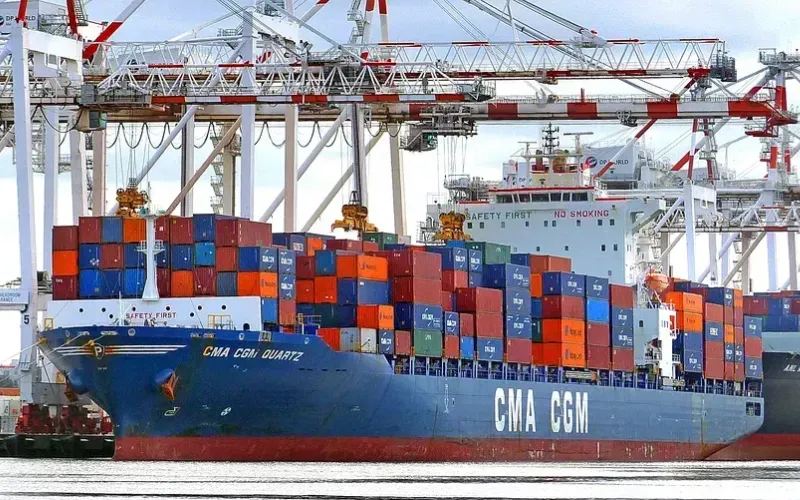
Container vessel at a transpacific terminal
Factor Ocean LCL Ocean FCL
Typical volume band (guideline, not a tariff) Often under about 12 CBM for regular commercial cartons Often from about 15 CBM up; 12–15 CBM—price both
Unit of sale on the ocean leg Per CBM or per W/M tonne (carrier or consolidator tariff) Per full container (20GP / 40GP / 40HC), subject to payload
Origin handling Truck to CFS, tally, palletise, consolidate into a shared box Truck to CY; one shipper’s cargo stuffed in the box
US destination handling Devanning at US CFS, split, storage until pickup Full container to CY or door; no shared deconsolidation
ISF 10+2 and CBP entry Same importer obligations as FCL—see /insights/isf-filing/ Same rules; stuffing location and consignee data must match the box
Exam or hold risk One co-loader’s hold can delay the whole consolidated container Your cargo only—holds follow your entry, not a stranger’s
Best Yihang fit Small lots, samples, first orders, light cartons Multi-carton programs, dense cargo, dedicated stow, repeat US buyers

Pre-booking checklist: LCL or FCL from China to the USA

  1. Gross weight and CBM for the full lot—if any carton is oversized, send L × W × H in centimetres per piece.
  2. Commodity, HS code if known, and whether the cargo is dense (metal, stone, machinery), fragile, or non-stackable.
  3. Factory pickup city in China and the real US destination (port code or ZIP)—not only “USA”.
  4. Cargo-ready date and latest acceptable arrival; LCL adds CFS dwell on both sides of the ocean.
  5. US importer of record confirmed; ISF 10+2 filer identified—see /insights/isf-filing/ and Sources (CBP).
  6. Customs bond status: continuous bond on file or plan for a single-transaction bond with your broker (CBP bond guidance in Sources).
  7. Incoterm (EXW, FCA, FOB, DAP, etc.) and whether you want port-only or door delivery—/insights/dpu-dap-ddp-door-delivery-from-china/ and /solutions/door-to-door/.
  8. Ask explicitly to price both modes if volume is between about 12 and 15 CBM, or if weight may force FCL—see /insights/weight-or-cube/.

How ocean LCL from China to the USA works

  • LCL (less than container load) means your cartons or pallets share a container with other shippers. At origin, cargo is delivered to a container freight station (CFS) or consolidator warehouse, tallied, and grouped into a full box for the ocean sailing.
  • The consolidator issues—or coordinates—the house bill of lading for your portion; the master bill covers the full container. Your freight charge is usually based on cubic metres (CBM) or on weight/measure (W/M): the carrier compares actual weight with a volume-derived weight (often 1,000 kg per CBM on LCL tariffs) and bills the higher basis—not the same 1:6,000 rule as air.
  • After discharge at a US port, the container moves to a US CFS for devanning. Your lot is separated, may sit in warehouse storage, and is released to you or your trucker once customs entry and any exam are complete.
  • That extra handling at origin CFS, ocean, and destination CFS is why LCL is flexible for small lots but can lose its advantage as volume grows—especially when destination fees are quoted per CBM or per shipment.

How ocean FCL from China to the USA works

  • FCL (full container load) gives one shipper exclusive use of a 20-foot (20GP), 40-foot (40GP), or 40-foot high cube (40HC) container for the main ocean leg. Cargo is usually stuffed at the factory, a nearby warehouse, or a container yard (CY) under your control.
  • You pay for the container unit (plus terminal, documentation, and any chassis or door delivery you buy)—not per CBM inside the box—subject to maximum payload and road limits at origin and destination.
  • The bill of lading names your container and seal; at the US side the box goes to port CY or direct to a door, depending on the quote. There is no shared deconsolidation unless you choose transloading after release.
  • Yihang’s core work on this lane is prepaid ocean FCL and multi-container programs for commercial and project cargo; LCL is quoted when the numbers genuinely fit. See /lanes/china-to-usa/ for gateway and planning windows.

What is on the LCL invoice vs the FCL invoice

  • LCL ocean freight: typically quoted per CBM or per W/M tonne on the consolidator’s tariff—not a universal public rate. Minimum charges per shipment often apply.
  • LCL origin: pickup, CFS receiving, consolidation, export customs, and local documentation—each line may be separate on the quote.
  • LCL destination: CFS unloading, deconsolidation, release fee, and storage after free time—often scaled by CBM or by weight; these charges are why two shippers with the same ocean rate can see different landed costs.
  • FCL ocean freight: quoted per container type (20GP, 40GP, 40HC) for the port pair you book, prepaid through Yihang.
  • FCL origin: trucking to CY, terminal handling, export clearance on Yihang’s AEO file, VGM, and any pre-carriage from inland China.
  • FCL destination: terminal handling, chassis, and drayage to CY or door; US customs entry and bond costs sit with the importer’s broker unless your quote includes priced brokerage.
  • This guide does not publish dollar rates. Use /insights/container-freight-rate-index/ for market context on container lines, then send your cargo for a prepaid Yihang quote.

Volume break-even: compare totals, not only ocean CBM

  • Rule of thumb on this site: under about 12 CBM, start with LCL; from about 15 CBM, start with FCL; between 12 and 15 CBM, price both. Dense cargo breaks the cube rule—see /insights/weight-or-cube/ and /insights/heavy-cargo-container-weight-limits/.
  • Worked comparison (you supply numbers—no rates invented here): let O_LCL = origin pickup + origin CFS + ocean LCL freight (on your W/M or CBM basis) + destination CFS/devanning + destination delivery to ZIP. Let O_FCL = origin pickup + ocean FCL (one container) + destination terminal + drayage/door. Choose the mode with the lower O at the same service level, or FCL when handling risk or payload forces a private box.
  • Example structure only: if your load is 13 CBM and 9,500 kg, W/M may bill you closer to 13 W/M tonnes than to light-carton LCL economics—FCL in a 20GP may weigh out before it cubes out; send the weight.
  • Internal volume check: a 20GP holds roughly 26–28 CBM of well-stacked cartons but far less payload when cargo is dense; a 40HC offers more cube but the same payload cap as many 40GP files—use /tools/container-fit/ before you assume “40-foot means cheaper per CBM.”
  • If you ship regularly to the same US door, FCL can also stabilise packing and reduce surprise storage at a US CFS—even when LCL ocean looks cheaper on the first line.

US import compliance: same obligations, different data fields

  • Importer Security Filing (ISF, “10+2”): CBP requires ISF for ocean cargo to the United States no later than 24 hours before cargo is loaded on the vessel to the US—per CBP’s Importer Security Filing page in Sources. LCL shippers still file; the consolidator’s name and CFS stuffing location must be accurate.
  • Customs bond: CBP requires a bond to secure duties, taxes, fees, and compliance. Continuous bonds cover recurring import activity; single-transaction bonds cover one entry—see CBP bond guidance in Sources. Yihang does not replace your US broker or bond.
  • CBP entry: after arrival, the importer or broker files entry in ACE (Automated Commercial Environment) for release. LCL and FCL use the same entry types for consumption imports; the broker matches house bill, master bill, and commercial invoice.
  • Commercial invoice, packing list, and HTS classification stay with the importer of record. China export clearance is on Yihang’s AEO brokerage file; US import is coordinated with your broker and named on the quote.
  • Deep dive: /insights/isf-filing/. Door terms: /insights/dpu-dap-ddp-door-delivery-from-china/.

Risks and trade-offs of LCL to the United States

  • Extra touches: each CFS move is another chance for carton damage—fragile goods, glass, or high-finish products often justify FCL even below 15 CBM.
  • Consolidation delay: your cargo waits for the CFS cut-off and enough co-loaders to fill the box; urgent US retail dates may not tolerate that variability.
  • Co-loader exam risk: if CBP selects the master container for exam, the entire box can be held—not only the shipment that triggered scrutiny.
  • Documentation mismatch: wrong consignee on the house bill, missing ISF bond data, or a typo in carton count at the US CFS slows release for everyone in that consolidation.
  • Storage clock: destination CFS free time is shorter than many importers expect; LCL that misses pickup accrues storage per CBM.

Container size choice when FCL wins

  • 20GP: often the first choice for dense US-bound cargo that weighs out before it fills the cube.
  • 40GP / 40HC: more stow for light, bulky cartons, furniture, or retail—40HC adds height for awkward stacks; payload limits still apply.
  • Check fit before you book: /tools/container-fit/ for internal dimensions and a stacking sketch.
  • Weight limits: road and terminal rules at US discharge and inland delivery can cap gross weight below the container’s plated maximum—/insights/heavy-cargo-container-weight-limits/.
  • Non-stackable or awkward shapes may need fewer pieces per box or open-top/flat-rack instead of dry FCL—say so on the inquiry.

West Coast vs East Coast routing (qualitative)

  • From East China, transpacific FCL and LCL often land at Los Angeles/Long Beach, Oakland, or Seattle/Tacoma for Western US destinations; New York/New Jersey, Savannah, and Houston serve Eastern, Midwest-via-rail, and Gulf consignees.
  • The right US port is the one that keeps total prepaid cost sensible to your ZIP—not the port with the lowest ocean line in isolation. Inland rail and truck from LA/LB to Chicago, Dallas, or Atlanta can reverse a “cheap” coast choice.
  • LCL consolidations may sail to one US hub and then truck nationwide after deconsolidation—confirm which US CFS your quote names.
  • Lane planning windows (not a booked transit) are summarised on /lanes/china-to-usa/. Current container market context: /insights/container-freight-rate-index/.

Typical scenario (illustrative): US distributor, mixed cartons

  • A US buyer sourced 8.5 CBM of mixed retail cartons from Ningbo—light weight, no single-SKU density issue.
  • LCL via consolidator CFS to a West Coast US CFS, then truck to a Southern California warehouse after importer broker release, was priced prepaid alongside a 20GP option that would have been mostly empty.
  • ISF was filed by the importer’s broker before load; continuous bond was already on file with CBP.
  • Illustrative pattern only—not a named client, rate, or transit time.

How Yihang quotes China to USA ocean freight

  • Side-by-side LCL and FCL when volume is in the 12–15 CBM band or when weight is ambiguous.
  • Prepaid ocean only—no freight collect.
  • China export on the AEO file; US ISF and entry coordinated with your broker—see /services/customs-brokerage/.
  • Door delivery quoted on request via /solutions/door-to-door/ when ZIP and commodity are confirmed.
  • Dalian and other North China origins often feed Shanghai, Ningbo, or Qingdao before the transpacific leg—name the factory city on /quote/.

Questions shippers ask

What is the difference between LCL and FCL shipping from China to the USA?

LCL shares container space and is priced mainly by CBM or W/M with CFS handling at origin and US deconsolidation. FCL books a full 20GP, 40GP, or 40HC for your cargo and is priced per container, with fewer shared-handling steps. Both require US ISF and a customs entry.

How much CBM should I ship LCL vs FCL to the United States?

On this site’s planning rule: under about 12 CBM, start with LCL; from about 15 CBM, start with FCL; between 12 and 15 CBM, price both. Heavy or fragile cargo may need FCL below 12 CBM—send weight, not only cube.

What is W/M in LCL freight?

Weight/measure: the consolidator compares actual weight with a volume-based weight (often using 1,000 kg per CBM on LCL tariffs) and charges the higher basis. Light, bulky cartons can be cube-driven; dense goods can be weight-driven—either way can push you toward FCL.

Does LCL from China to the USA still need ISF filing?

Yes. CBP’s ISF rule applies to ocean cargo to the United States, including LCL. It must be filed no later than 24 hours before loading on the US-bound vessel. See /insights/isf-filing/ and CBP Sources on this page.

Who needs a US customs import bond for LCL or FCL?

The US importer of record must secure a bond acceptable to CBP—continuous or single-transaction per CBP bond guidance in Sources. Yihang does not file the bond; your broker arranges it.

Why can LCL be delayed when my documents are perfect?

LCL moves in a shared container. CFS cut-offs, co-loader cargo readiness, vessel space, or a CBP hold on the master box can delay everyone’s freight. FCL isolates your box from another shipper’s exam—but not from weather or terminal congestion.

Should I use Los Angeles or New York for China to USA LCL?

Choose the gateway that minimises total prepaid cost to your US ZIP after ocean, CFS, and inland legs—not the coast with the lowest headline rate alone. Compare on one quote with your destination postcode; see /lanes/china-to-usa/.

Do you offer freight collect LCL or FCL to the United States?

No. Ocean freight from China to the USA is quoted prepaid through Yihang. The reply lists origin, ocean, and any destination services you requested.

Quote LCL or FCL China to USA

Weight, CBM, factory city, US port or ZIP, ready date, dense or fragile yes/no, and who files ISF. The desk compares LCL and FCL on one prepaid reply when volume is borderline.

Step 1 — lane and contact

Email or phone — one is enough.

Request a quote WhatsApp