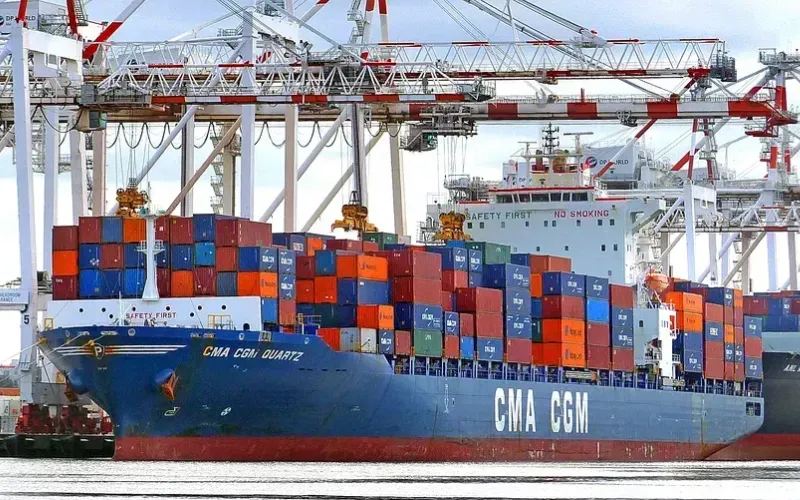
How do you ship refrigerated cargo from South America to Asia as cross-trade?
Reefer cross-trade from South America to Asia is ocean freight where the seller and buyer sit in third countries and a China-based forwarder such as Dalian Yihang Shipping Agency books prepaid reefer space, puts the setpoint and ventilation on the carrier booking, and coordinates documents and bill-of-lading instructions without cargo loading in China. Frozen seafood, meat, and chilled or frozen fruit from Chile, Peru, Ecuador, Brazil, or Argentina move to Chinese, Japanese, Korean, or Southeast Asian ports on Pacific or Atlantic routings confirmed per booking—not fixed transit averages. Yihang does not clear import customs as the importer at destination; for frozen seafood into China, consignee registration and GACC Decree 248 are covered on /insights/reefer-shipping-to-china-gacc/, not duplicated here.
Dalian Yihang Shipping Agency Co., Ltd. — Class-A international freight forwarder, NVOCC (Ministry of Transport), AEO advanced-certified (founded 2020). One desk for routing, documents, and prepaid ocean freight. A real person on our desk reviews every inquiry and replies with a written plan.
Published 2026-11-12 · By Delia Qu, Deputy General Manager
Frozen storage band in FAO/WHO guidance on frozen fish; match exporter spec and the booking
Chilled fish and seafood
0 °C (32 °F) near
Fresh-fish handling band in FAO technical guidance; ice or slurry may apply—name on inquiry
Frozen meat (beef, pork, poultry)
−18 °C or below for frozen product
USDA cold-storage tables for frozen meat; veterinary certificates per export country
Chilled meat
−1 °C to +4 °C (30–40 °F) in USDA tables
Narrow band—setpoint and circulation on the booking; not a dry box
Bananas (green)
13–14 °C (56–58 °F) in USDA storage handbook
Ventilation required; carrier reefer instructions must match the shipper’s maturity stage
Grapes, cherries, stone fruit (chilled)
−1 °C to +4 °C or product-specific band in USDA AH-66
Cold treatment or phytosanitary rules are destination-specific—broker confirms before load
How does reefer cross-trade from South America to Asia work?
Shipper names the South American load port (Pacific: for example San Antonio / Valparaíso, Callao, Guayaquil; Atlantic: for example Santos, Buenos Aires), Asian discharge port or door, commodity, setpoint, container count, and cargo-ready date.
Yihang confirms prepaid reefer space on a rotation that serves both coasts as the quote names—transshipment hubs are priced on the same file when no direct string fits the week.
The booking carries operating instructions: setpoint in °C, ventilation, humidity when required, pre-cooling or pulp-temperature evidence, and genset or shore-power needs at load and discharge.
Export documents are aligned with the shipper’s veterinarian or plant-health authority (meat, seafood, fruit) and with what the Asian importer’s broker will file—Yihang does not act as importer of record.
Bill of lading and manifest data match the reefer booking (commodity description, temperature instruction, consignee/notify as the broker requires).
In transit, status is tracked to ETA; plug-in or cold-store delivery at destination is coordinated when the quote includes those prepaid services.
What is reefer cross-trade in this lane?
Cross-trade (third-country) freight: cargo does not load in China, but a China-based forwarder books and documents the move for seller and buyer in other countries.
Dalian Yihang Shipping Agency arranges cross-trade shipments on global lanes; prepaid ocean and air only—no freight collect.
The reefer file is still a temperature file: commodity, setpoint, and ventilation belong on the booking before a box is held.
Lane context for China-origin moves the other direction: /lanes/china-to-south-america/ and /lanes/china-to-brazil/.
What goes on a reefer booking checklist?
Setpoint in °C (or °F with the metric repeated) — not only the word “frozen”.
Ventilation rate when the commodity needs fresh air (for example ethylene-sensitive fruit).
Humidity setting when the product datasheet or shipper requires it.
Pre-cooling: cargo should reach the setpoint before stuff when the shipper’s spec says so—pulp temperature on the inquiry.
Genset or plug-in: whether the container must stay powered on truck, at the terminal, or at the consignee’s door.
Cold treatment or in-transit sterility programmes when the destination country requires them—duration and protocol come from the phytosanitary authority, not from this page.
Container count, size (20′ RF vs 40′ RF), and whether cargo-ready dates must align across several boxes.
Which South American and Asian ports are usually in scope?
Pacific South America: Chilean ports (San Antonio / Valparaíso), Callao (Peru), Guayaquil (Ecuador)—routed to East and Southeast Asia or North Asia as the quote names.
Atlantic South America: Santos and southern Brazil ports, Buenos Aires (Argentina)—often via transshipment to Asian hubs; total port-to-port time is confirmed per booking.
Asian discharge: Chinese ports (for example Shanghai, Ningbo, Qingdao), Busan, Yokohama / Tokyo bay ports, and Southeast Asian gateways when you name the city.
No transit days or freight rates are published here—they are confirmed on each prepaid quote.
Documents checklist (confirm with shipper broker and destination broker)
Commercial invoice and packing list matching the bill of lading marks.
Ocean bill of lading with reefer operating instructions reflected in the carrier booking.
Export health or veterinary certificate for meat and seafood when the exporting country requires it.
Phytosanitary certificate and treatment certificates for fresh fruit when the destination requires them.
Certificate of origin when the importer claims preferential duty.
Fumigation or treatment records when cold treatment or pest-risk rules apply.
For frozen seafood into China only: consignee as registered food importer and GACC Decree 248 plant registration—see /insights/reefer-shipping-to-china-gacc/.
Common mistakes on South America–Asia reefers
Booking a dry container because the rate looked simpler—a reefer commodity needs an operating reefer unit.
Setting “−18 °C” on the paperwork but stuffing warm product without pre-cool time the shipper’s spec requires.
Ignoring ventilation for fruit that needs air exchange, or leaving ventilation open on cargo that should stay closed.
Mixing Atlantic load with a Pacific discharge plan (or the reverse) when only “South America to Asia” was sent.
Consignee or notify party on the B/L not matching what the destination broker needs for customs pre-arrival filings.
Assuming Yihang is the food importer in China—import entry stays with the registered consignee and their broker.
Requesting freight collect—this lane is quoted prepaid only.
How Yihang handles reefer cross-trade for you
Books prepaid reefer space and holds the operating instructions on the carrier booking (setpoint, ventilation, humidity).
Coordinates shipper, notify, and consignee details for bill of lading and manifest so they match the customs file.
Aligns export certificates and shipping documents with the temperature and commodity on the booking.
Tracks the container to ETA and names plug-in, genset, or port cold-store needs when those services are on the quote.
Handles cross-trade B/L instructions as a third-country forwarder file—one desk in China for seller and buyer.
Does not clear import customs as importer unless your contract and quote explicitly say otherwise; meat and fruit import rules stay with the buyer’s broker.
What to send us for a quote
Origin port and destination port (or door address if delivery is on the quote).
Commodity and HS code if known (seafood species, meat cut, fruit variety).
Temperature setpoint and any ventilation or humidity requirement from the shipper spec.
Container count and size (20′ RF / 40′ RF), stackable or not.
Cargo-ready date and whether several reefers must sail together.
Incoterm and whether the move is cross-trade only or includes pickup/delivery legs.
Whether continuous power is needed inland at origin or destination.
Linked pages are the publishers’ own. A figure on this page is theirs, for the date named. It is not a Yihang rate.
Questions shippers ask
Can Yihang book reefer containers from Chile or Brazil to China?
Yes, on prepaid cross-trade terms when origin port, Chinese discharge, commodity, and setpoint are on the inquiry. Frozen seafood into China still requires a registered consignee and GACC facility registration—see /insights/reefer-shipping-to-china-gacc/.
What is the difference between cross-trade and shipping from China?
Cross-trade cargo loads in South America and discharges in Asia without a China load port. Yihang still books from China as forwarder. China-export reefers are quoted on /lanes/china-to-south-america/ when the factory is in China.
Do you publish reefer rates or transit times on this lane?
No. Pacific versus Atlantic origin, transshipment, and setpoint change space and routing each week. The quote names prepaid charges and a planning window when available.
Who clears customs for meat or fruit arriving in Japan, Korea, or Southeast Asia?
The importer of record and their licensed broker at destination. Yihang coordinates shipping documents and timing; it does not replace the destination customs agent unless the quote says so.
Can you handle multi-container reefer programmes?
Yes, when container count, setpoints, and cargo-ready weeks are sent on one file. See /solutions/reefer/ and /solutions/multi-container-projects/ for equipment context.
Is freight collect available?
No. Cross-trade ocean on this lane is quoted prepaid only.