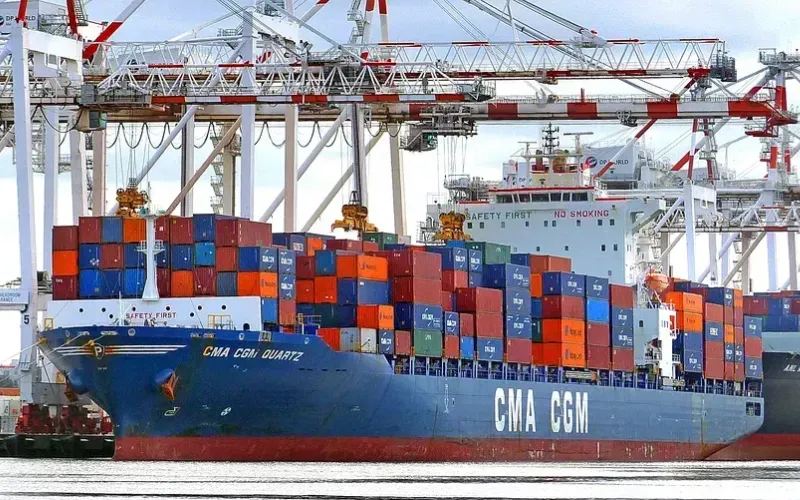
How do you ship from Vietnam or Southeast Asia to Europe when the cargo does not load in China?
Cross-trade ocean freight from Vietnam and Southeast Asia to Europe is booked prepaid through a China-based forwarder such as Dalian Yihang Shipping Agency: cargo loads at ports such as Ho Chi Minh City or Cat Lai, Haiphong, Laem Chabang, Port Klang, or Jakarta, and discharges at North Range or UK gateways such as Rotterdam, Hamburg, Antwerp, or Felixstowe without a Chinese load port on the bill of lading. Routing is usually mainline Asia–Europe via a hub named on the quote; port-to-port time is confirmed per booking, not published here. Non-stackable pallets are a frequent inquiry on this lane—declare them on the booking, plan floor space in FCL, and expect LCL to bill the height band above the footprint because that cube cannot be sold to other shippers.
Dalian Yihang Shipping Agency Co., Ltd. — Class-A international freight forwarder, NVOCC (Ministry of Transport), AEO advanced-certified (founded 2020). One desk for routing, documents, and prepaid ocean freight. A real person on our desk reviews every inquiry and replies with a written plan.
Published 2026-11-14 · By Delia Qu, Deputy General Manager
Charged on weight or measure; non-stackable footprint is often rated at full usable height above the pallet, not pallet height only
Few pallets and modest floor area when the height charge still beats a full box
Ocean FCL (20′ / 40′ / 40′ HC)
You pay for the container; stowage is planned on floor area and payload, with lashings and dunnage
Growing footprint, several non-stack lines, or when LCL height billing exceeds one box
Flat rack / open top
Out-of-gauge or over-height units that do not fit a dry door; lashed as project cargo
Machinery or crates taller or wider than a closed container allows
How does Southeast Asia to Europe cross-trade work, step by step?
Shipper names the load port (for example Cat Lai, Haiphong, Laem Chabang, Port Klang, Tanjung Priok), European discharge port or door, commodity, pallet or package dimensions, gross weight, stackable or non-stackable, Incoterm, and cargo-ready date.
Yihang confirms prepaid ocean space on an Asia–Europe rotation the quote names—direct strings and transshipment legs are priced on the same file.
Non-stackable cargo is flagged on the booking and packing list; LCL floor and height rules or FCL stowage are planned before the vessel is held.
Export documents are aligned with the shipper, notify party, and the European importer’s broker: invoice, packing list, bill of lading, and origin papers when preferential duty is claimed.
Wood pallets and crates carry ISPM 15 marks where applicable; EU import checks packaging as well as product.
In transit, status follows to ETA; inland trucking or rail inside Europe is coordinated when the quote includes a door.
What is cross-trade on Vietnam and Southeast Asia to Europe?
Third-country freight: seller and buyer may sit outside China, and cargo does not load at a Chinese port, but a Dalian-based forwarder books and documents the move.
Dalian Yihang Shipping Agency arranges prepaid cross-trade on global lanes; freight collect is not offered on this lane.
The desk still needs the real origin port—'Southeast Asia' without a city is not enough to name a sailing.
China-origin moves to the same European ports are quoted on /lanes/china-to-europe/ and /de/seefracht-china-deutschland/.
Which origin and discharge ports are usually in scope?
Vietnam: Ho Chi Minh City area (Cat Lai terminal), Haiphong for North Vietnam factory cargo.
Thailand: Laem Chabang as the deep-sea gateway for Bangkok and Eastern Seaboard suppliers.
Malaysia: Port Klang (West Port / North Port) for Klang Valley and Johor-linked cargo.
Indonesia: Jakarta (Tanjung Priok) and sometimes Surabaya (Tanjung Perak) when the supplier names the city.
Europe: Rotterdam, Hamburg, and Antwerp as North Range hubs; Felixstowe and other UK gateways when the consignee names them.
Inland doors in Germany, the Netherlands, Belgium, France, Poland, and elsewhere are quoted when the address and equipment are on the inquiry.
No transit days or freight rates are published here—they are confirmed on each prepaid quote.
How is routing planned on this lane?
Most cargo connects on Asia–Europe mainline strings from Southeast Asian load ports, sometimes after a feeder within the region.
Transshipment at a hub port is common when no direct string matches the cargo-ready week—the quote states load, connect, and discharge ports.
North Range discharge is often chosen for distribution into the EU and UK; the importer’s broker confirms which port matches their customs file.
Rail inside Europe after ocean is a separate prepaid leg when you ask for a door beyond the port.
Why do non-stackable pallets need extra space and attention?
Non-stackable means nothing may be placed on top—fragile goods, machinery with irregular tops, cartons that crush, or finished goods that must not take weight.
In a container, that line consumes floor area for the full length of the box; volume in CBM alone understates the problem.
In LCL, the consolidator cannot sell the cube above a non-stack footprint to another shipper, so chargeable measure often follows the height band above the pallet, not the pallet’s own height—confirm the rule on your quote.
In FCL, you still plan by floor and payload: several non-stack pallets can fill a 40-foot floor before the cubic metre tally suggests a smaller box.
See /insights/non-stackable-cargo-shipping/ and /insights/weight-or-cube/ for the general rules; this lane applies them on Southeast Asian export loads.
When does FCL beat LCL for non-stackable pallets?
As pallet count and footprint grow, LCL height billing often overtakes the cost of one dry container—send both options on the same inquiry.
Mixed stackable and non-stack lines in one shipment: the non-stack rows dictate floor planning even when other cartons are small.
Heavy non-stack cargo may weigh out a container before the floor looks full—payload limits matter alongside floor area.
The usual volume guide on this site still applies: above roughly 15 CBM of stackable cargo, FCL is often cleaner; non-stackable cargo overrides that sooner.
Project dimensions that exceed dry container door height or width move to open top or flat rack—see /insights/shipping-machinery-from-china/ for the decision pattern.
How should non-stackable pallets be marked and secured?
Mark 'Do not stack' on at least two sides and the top, with ISO 780 pictograms where practical.
Write non-stackable on the commercial packing list and on the booking instruction sent to the forwarder.
Use a strong pallet base, strap the load to the skid, and keep the top flat so handlers see that stacking is not allowed.
Inside an FCL, brace gaps with dunnage or airbags and lash per the CTU Code so units do not shift in rough weather.
Wood packaging must meet ISPM 15 when wood is used; plastic pallets avoid that mark but still need strength for forklift handling.
Documents checklist (confirm with shipper and EU broker)
Commercial invoice and packing list with weights, dimensions, and stackable or non-stackable noted per line.
Ocean bill of lading with consignee and notify party matching the importer’s customs instructions.
HS code or clear commodity description for EU import filing.
Certificate of origin or supplier declaration when the importer claims preferential duty—for Vietnam exports to the EU under EVFTA, the European Commission’s agreement pages describe the proof-of-origin system your broker must follow; Yihang does not certify origin.
EUR.1 movement certificate or registered exporter (REX) origin declaration when the product qualifies under EVFTA—your Vietnamese exporter and EU broker confirm which form applies; Form A under older preference schemes is not interchangeable without broker advice.
EORI or EU importer identification the consignee’s broker needs for customs.
ISPM 15 compliance on wood pallets and crates.
Dangerous goods data sheet and UN number before booking when batteries or DG are in the lot.
Common mistakes on Southeast Asia to Europe moves
Booking 'stackable' to get a lower LCL rate when the product cannot take weight on top.
Sending only total CBM without pallet footprints, so the warehouse plans the wrong equipment.
Naming 'Europe' without Rotterdam, Hamburg, Antwerp, Felixstowe, or a full door address.
Leaving preferential origin to the last week—EVFTA proof is issued or declared before shipment, not after arrival.
Assuming Yihang is the EU importer of record—import clearance stays with the consignee and their licensed broker.
Mixing freight collect language into a prepaid-only booking file.
How Yihang handles Southeast Asia to Europe cross-trade for you
Books prepaid ocean FCL or LCL from the Southeast Asian load port you name to the European port or door on the quote.
Flags non-stackable cargo on the booking and aligns stowage planning with consolidators or full-container load plans before cutoff.
Coordinates shipper, notify, and consignee details on the bill of lading so they match the EU customs file.
Aligns shipping documents with the packing list dimensions and stackable declarations on the inquiry.
Tracks containers to ETA and names inland delivery partners in Europe when those services are prepaid on the quote.
Does not clear EU import customs as importer unless your contract explicitly says otherwise.
Quote checklist — what to send
Origin port or city (for example Cat Lai, Haiphong, Laem Chabang, Port Klang, Tanjung Priok).
Destination port or full European door address.
Pallet or package count; length × width × height per type in centimetres.
Gross weight per pallet or total shipment weight.
Stackable or non-stackable—declare each line if mixed.
Commodity description and HS code if known.
Incoterm (EXW, FOB, CIF, DAP, DPU, etc.) and whether freight is prepaid (required on this lane).
Cargo-ready date and any factory closing dates.
Photos or diagrams when machinery or irregular shapes affect door clearance.
Linked pages are the publishers’ own. A figure on this page is theirs, for the date named. It is not a Yihang rate.
Questions shippers ask
Can Yihang book freight from Vietnam to Rotterdam or Hamburg without loading in China?
Yes, on prepaid cross-trade terms when the origin port, European discharge, dimensions, and Incoterm are on the inquiry. Yihang books as forwarder from China; cargo loads in Vietnam or elsewhere in Southeast Asia as named on the bill of lading.
How are non-stackable pallets charged in LCL from Southeast Asia to Europe?
LCL is rated on weight or measure, and non-stackable footprints often bill the space above the pallet to the usable height band because that volume cannot be shared. The exact divisor differs by consolidator—both LCL and FCL are compared on your quote.
When should I choose FCL instead of LCL for non-stack pallets?
When floor area or LCL height billing would fill more than one height band or exceed one container’s worth of chargeable cube. Send pallet dimensions; Yihang compares both modes prepaid.
Which documents prove EVFTA origin for Vietnam exports to the EU?
Preferential origin under the EU–Vietnam agreement is governed by the EVFTA rules—the EU publishes the framework on its trade policy site, and your exporter and EU broker choose EUR.1 or REX proof when the product qualifies. Yihang coordinates shipping papers but does not issue origin certificates.
Do you publish rates or transit times on this lane?
No. Hub choice, season, and equipment change each week. The quote names prepaid charges and a planning window when the rotation is known.
Who clears customs in Rotterdam, Hamburg, or Antwerp?
The EU importer of record and their licensed customs broker. Yihang coordinates bill of lading and manifest timing; it does not replace destination clearance unless the quote explicitly includes that scope.
Is freight collect available from Vietnam or Indonesia to Europe?
No. Cross-trade ocean on this lane is quoted prepaid only.