Guide

What is China’s steel export licence in 2026?

From 1 January 2026, listed steel products exported from China need a Ministry of Commerce (MOFCOM) export licence before customs will clear the shipment. The Chinese exporter or producer applies—not the overseas buyer—but your timeline should assume no firm ocean booking, no stuffing date, and no final supplier payment until that licence is issued for the quantity and HS code on your contract.

Dalian Yihang Shipping Agency Co., Ltd. — Class-A international freight forwarder, NVOCC (Ministry of Transport), AEO advanced-certified (founded 2020). One desk for routing, documents, and prepaid ocean freight. A real person on our desk reviews every inquiry and replies with a written plan.

Published 2026-11-18 · By Delia Qu, Deputy General Manager

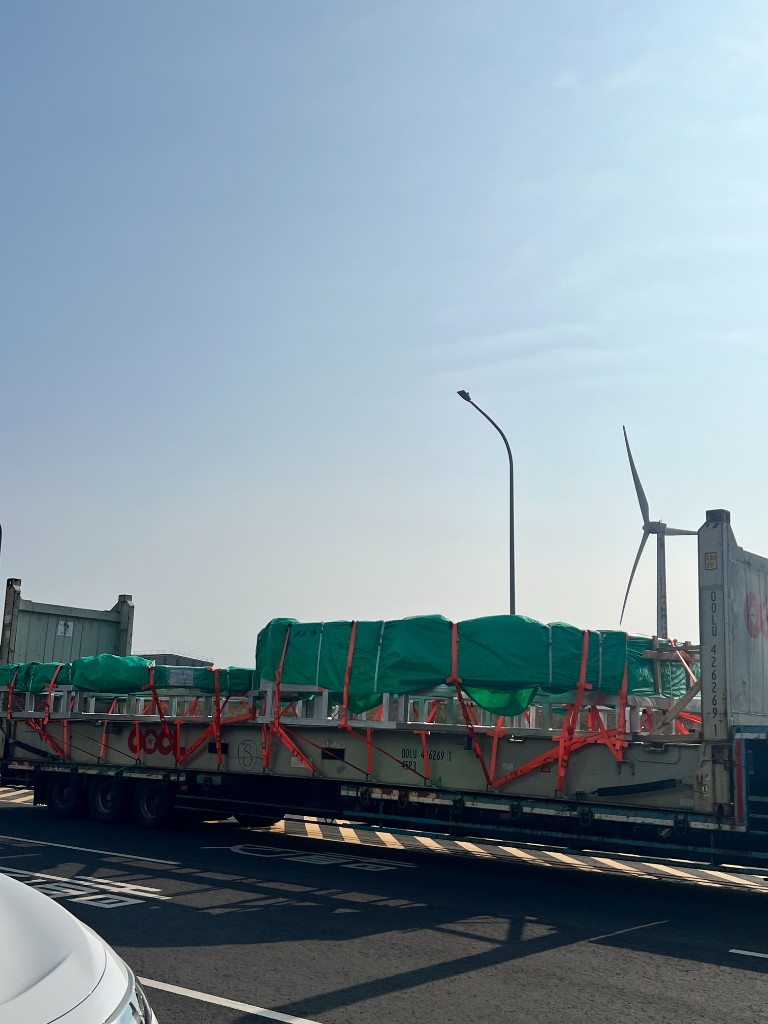
Steel cargo secured for export loading
Document or record Who provides When on the file
Signed export contract (buyer and seller) Chinese exporter Before licence application; quantities and HS code must match the licence row
Producer quality inspection certificate Manufacturer (mill), not the trader alone Uploaded with the licence file; producer name must match the licence application
MOFCOM export licence (electronic) Exporter via provincial or MOFCOM licence authority Before export customs declaration; customs verifies online
Commercial invoice and packing list Exporter Aligned with licence quantity, description, and destination country
Mill test certificate / material spec (if contract requires) Mill or supplier Usually with production; may be required for import, separate from licence QC certificate
VGM and container stow plan Shipper / forwarder After export documents align and stuffing is scheduled—not before licence

Overseas buyer checklist before you pay or book steel from China

  1. Ask the seller for the 10-digit Chinese HS code and confirm with them whether the line appears in the annex to MOFCOM Announcement No. 79 of 2025—not every steel SKU is on the list.
  2. Put licence timing in the sales contract: who applies, target application date, and what happens if customs cannot declare export by your cargo-ready date.
  3. Require a copy of the export licence (or valid application reference) before you authorize ocean booking or pay the balance—Yihang can align freight once the exporter’s papers match the shipment.
  4. Match contract quantity to licence quantity; for standard trade (not processing trade), plan on one customs declaration per licence unless your broker confirms a different MOFCOM rule for your trade mode.
  5. Confirm Incoterm: on FOB, you book prepaid ocean freight; on CIF, the seller must still obtain the licence before load—either way, freight is quoted prepaid through Yihang, not collect.
  6. Send weight, dimensions, and equipment needs early—coils and plate often need 20-foot boxes for payload; long members may need flat rack or breakbulk (see linked guides).
  7. Tell your import broker separately about destination measures—EU anti-dumping on certain cold-rolled flat steel from several origins (China not in that 16 November 2026 measure) and Australian duties on certain plate may apply on import regardless of China’s export licence.

Which steel products need the export licence?

  • MOFCOM and China Customs Announcement No. 79 of 2025 adds the products in its annex to export-licence management from 1 January 2026. Trade press and provincial commerce bureaus describe roughly 300 HS lines spanning primary iron and steel inputs, flat and long steel, stainless and alloy products, rail and pipe, and tube fittings—chapters 72 and 73 in summary terms, not as a substitute for the official annex.
  • Only codes listed in the annex need a licence. If your mill’s code is not on the current list, export proceeds under normal customs rules until MOFCOM updates the directory—always ask the exporter to check the published attachment, not a blog summary.
  • The official announcement links an attachment titled for steel products subject to export-licence management; use that file or the MOFCOM export-licence portal list for the HS code on your invoice.
  • This guide does not reproduce individual 10-digit codes—they change with MOFCOM publications.

Who applies, and what documents does MOFCOM require?

  • The foreign trade operator exporting the goods applies through the MOFCOM business system, usually with an electronic key. Provincial or designated municipal commerce departments issue licences for most exporters; centrally administered state-owned enterprises in Beijing apply through MOFCOM’s licence bureau, per Announcement No. 79.
  • Core uploads: the export contract (Chinese party chop and foreign party signature) and a product quality inspection certificate issued by the producer.
  • Guangzhou’s commerce bureau FAQ states the quality certificate must come from the actual manufacturer, not a trader rewriting paperwork, and that the producer name on the certificate must match the licence application.
  • Processing or compensation trade exports still need a licence under the announcement; those trade modes follow different ‘one licence, multiple clearances’ rules—see validity below.
  • Yihang coordinates ocean freight and export declaration timing with your supplier but does not apply for MOFCOM export licences on the exporter’s behalf.

Validity, one shipment per licence, and quantity limits

  • Provincial guides (Guangzhou, Tianjin) state steel export licences are generally valid up to six months and must be used within the calendar year shown on the certificate—check the electronic licence’s expiry field.
  • For ordinary export trade (not processing or compensation trade), Guangzhou’s FAQ describes 一批一证: the licence is consumed on one customs declaration within its validity—not multiple unrelated sailings on one permit.
  • Processing and compensation trade may use a licence for multiple customs clearances within validity, with a cap of twelve clearances, per the same provincial guidance summarising Announcement No. 79.
  • Guangzhou notes customs enforcement is based on declaration time, not the vessel’s departure date—align licence dates with when the exporter intends to declare export.
  • Contract overflow: commerce bureau FAQs reference MOFCOM rules allowing small quantity tolerance on bulk commodities including steel on the final clearance—confirm with the exporter if your contract has a plus/minus tolerance so the licence quantity covers the actual load.

How the licence changes ocean booking timing

  • Chinese customs will not clear export for listed products without a valid licence tied to the declaration. That means stuffing, VGM, and bill-of-lading release should wait until the exporter holds the permit for that quantity and destination country.
  • Do not treat a ‘vessel space held’ message as cargo-ready if export papers are still open—demurrage and factory storage often start when buyers press for load before the licence issues.
  • If you are the FOB buyer, your prepaid freight booking with Yihang still depends on export clearance finishing; share the licence number or exporter confirmation when you request space.
  • If you are buying CIF, the seller must complete licence and export steps before the shipment is truly on board—your payment terms should reflect that sequence.
  • Licence processing time is not fixed on this page; Tianjin’s guide notes issuing authorities target licence decisions within a few working days when applications are complete—build buffer between mill completion and your required sailing week.

Incoterms, payment, and prepaid freight

  • FOB (Incoterms 2020): seller delivers cleared for export at the named port; buyer arranges main carriage. Licence and export clearance stay on the seller; you book prepaid ocean freight with Yihang.
  • CIF: seller pays freight to the named port, but the buyer still needs confidence the licence and export declaration are done before the cargo is effectively shipped.
  • Yihang quotes ocean freight prepaid only—no freight collect—whether you buy FOB or CIF from the mill.
  • Put licence delay, rebooking cost, and who pays storage into the contract when buying on tight project deadlines—see /insights/dpu-dap-ddp-door-delivery-from-china/ for wider door-term context.

Packing and equipment when steel finally moves

  • Coils, plate, pipe, rebar, beams, and dense billets often weigh out a container before they fill it—a 20-foot box is frequently the right tool for heavy steel; see /insights/heavy-cargo-container-weight-limits/.
  • Long H-beams, wide plate, or pipe that exceeds dry-box dimensions move to /solutions/flat-rack-open-top/ or /solutions/break-bulk-shipping/—compare on /insights/shipping-steel-structures-from-china/ when the cargo is fabricated members.
  • Non-stackable or nested steel should be declared on the booking; see /insights/non-stackable-cargo-shipping/.
  • Lashing and dunnage follow cargo type—coil eyes, edge protection, and floor load spread are planned on /solutions/steel-products/ with your packing list.
  • The export licence does not replace import rules at destination—duty, safeguards, and anti-dumping are separate broker checks.

Destination trade measures importers should not confuse with China’s licence

  • On 16 November 2026 the European Commission imposed anti-dumping duties on imports of certain cold-rolled flat steel from several trading partners; the Commission’s public notice names India, Japan, Taiwan, Türkiye, and Vietnam—not the People’s Republic of China in that measure. Your EU broker still classifies the exact product and origin.
  • Australia imposed anti-dumping and countervailing measures on certain flat rolled steel plate from China and anti-dumping measures on goods from Korea, with notice ADN 2026/103 published in September 2026, per Australia’s trade remedies register. In November 2026 the Anti-Dumping Review Panel opened a review at the request of two Chinese producers—outcomes may change duties later; your Australian broker confirms the rate on the exporter and tariff line.
  • Caribbean, Latin American, Canadian, and Mexican imports have their own tariff and customs rules—the China export licence is only the Chinese export gate.

Common mistakes overseas buyers make on licensed steel

  • Paying the balance or opening L/C before the exporter has a licence for the HS code and quantity on the invoice.
  • Booking multiple containers on one licence when the trade mode requires one declaration per permit.
  • Assuming any ‘steel’ needs a licence without checking the MOFCOM annex—wasting weeks on paperwork for an out-of-list code.
  • Using a trader’s quality certificate instead of the mill’s certificate on the MOFCOM file.
  • Fixing CIF ocean space while the seller’s licence application is still pending—then disputing who pays rolling costs.
  • Choosing 40-foot equipment for dense coil without a payload check—then failing VGM or road limits at origin.
  • Expecting Yihang to obtain the MOFCOM licence—the exporter of record must hold it.

Typical scenario (illustrative): Caribbean buyer, FOB coils

  • A buyer in the Caribbean signed FOB for hot-rolled coil from North China. The mill confirmed the HS code is on Announcement No. 79’s list.
  • The buyer waited to confirm prepaid freight until the exporter sent the electronic licence number matching contract tonnage and destination.
  • Yihang booked two 20-foot containers for payload, coordinated export clearance on the AEO file, and quoted prepaid ocean to a Caribbean gateway on /lanes/china-to-caribbean/.
  • Illustrative pattern only—not a named client, rate, or transit time.

How Yihang handles steel export freight from Dalian and other Chinese ports

  • Dalian Yihang Shipping Agency Co., Ltd. is a Class-A international freight forwarder and NVOCC with AEO advanced certification, founded in 2020.
  • We compare FCL, flat rack, open top, and breakbulk on your packing list when dimensions are on the file—see /solutions/steel-products/.
  • We align vessel booking and stuffing with export documents the Chinese exporter provides; we do not apply for MOFCOM steel export licences.
  • Export clearance can be coordinated on the AEO brokerage file when booked; freight is quoted prepaid only.
  • Optional loading supervision and cargo insurance are scoped on request—/services/cargo-supervision/ and /services/cargo-insurance/.

Questions shippers ask

Do overseas buyers apply for China’s steel export licence?

No. The Chinese foreign trade operator exporting the goods applies to MOFCOM or the delegated provincial authority. Buyers should contract for timely licence issuance and verify the permit before ocean booking or final payment.

When did China’s steel export licence start?

Announcement No. 79 of 2025 by MOFCOM and China Customs takes effect on 1 January 2026 for the products listed in its annex.

Is it one export licence per shipment?

For standard export trade, provincial commerce guidance describes one customs declaration per licence within validity (一批一证). Processing and compensation trade can allow multiple clearances up to twelve times on one licence—confirm your seller’s trade mode.

How long is the steel export licence valid?

Provincial guides cite a general maximum of about six months and use within the calendar year on the certificate. Read the expiry on the electronic licence—not a guess from this page.

What documents must the Chinese exporter upload?

The export contract and a producer-issued product quality inspection certificate are the core requirements in Announcement No. 79; provincial FAQs add details such as matching producer names and contract quantities.

Can I book ocean freight before the licence is issued?

You can inquire early, but firm space and stuffing should wait until the exporter confirms the licence covers your quantity, HS code, and destination country—otherwise export customs may block the load.

Does the licence replace EU or Australian anti-dumping duties?

No. It is an export control step in China. EU and Australian import duties depend on product, origin, and exporter—your destination broker checks those separately.

Does Yihang offer freight collect on steel from China?

No. Ocean freight is quoted prepaid. Send POL, POD, cargo details, and licence status on /quote/.

Quote steel products from China

HS code or product description, tonnage or dimensions, load port, destination, Incoterm, and whether the seller has applied for the export licence.

Step 1 — lane and contact

Email or phone — one is enough.

Request a quote WhatsApp