Guide

Import cars from China: paperwork and UN3556 before RoRo or container space.

To import cars from China, fix export licence and used-car rules first, then choose RoRo shipping from China when car-carrier space exists or a 40HC container when PCTC sailings are tight. To import EV from China in a box, declare Class 9 UN3556 with ocean placards; RoRo decks may use SP 961 when conditions are met—not courier battery stickers. Pure BEVs (HS 8703801090) need China export licence from 1 January 2026; registrations inside 180 days need manufacturer service confirmation. Dalian Yihang Shipping (founded 2020) checks the vehicle file and quotes prepaid ocean only.

Dalian Yihang Shipping Agency Co., Ltd. — Class-A international freight forwarder, NVOCC (Ministry of Transport), AEO advanced-certified (founded 2020). One desk for routing, documents, and prepaid ocean freight. A real person on our desk reviews every inquiry and replies with a written plan.

Published 2026-11-12 · By Delia Qu, Deputy General Manager

Updated 2026-11-16

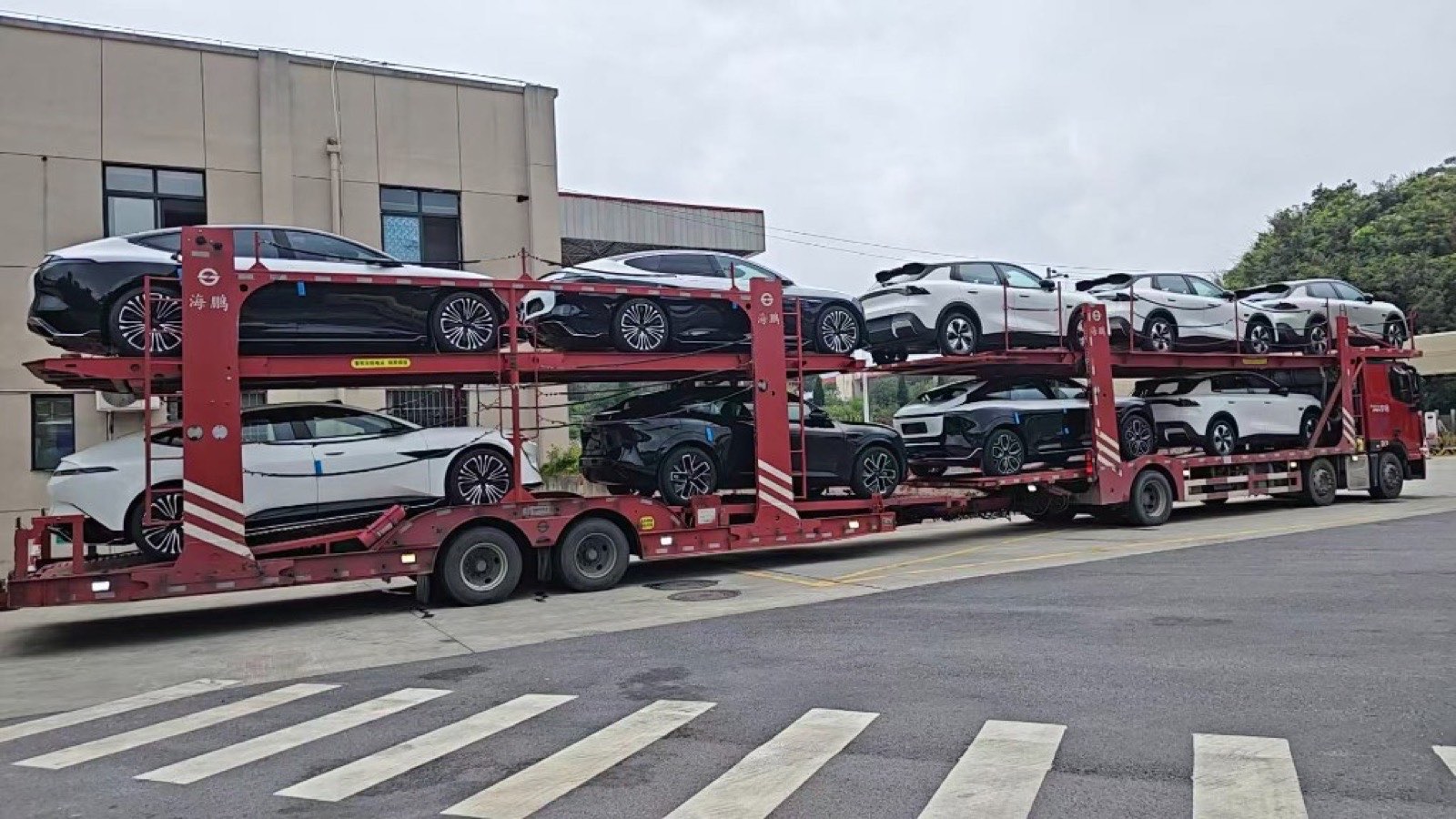
Sample vehicles on a car carrier before export loading
RoRo vs container RoRo (PCTC) Container (40HC)
Typical lot size Often 10+ drivable new units Often 1–9 cars, used units, or no PCTC call at POD
Space availability late 2026 Tight; new PCTC tonnage mostly from 2028 Uses general container strings; subject to equipment at POL
Lithium-ion EV declared Normally SP 961 exempt on vehicle deck UN3556 Class 9; placards required in box
Personal effects inside car Usually prohibited loose inside Spare parts OK if on invoice/packing list
Non-runner / damaged Often refused or extra survey Crane load; may still need UN3556 if BEV
Documents (China export) Same BEV licence / 180-day rule Same export licence; stuffing photos + lashing plan

What you would chase alone — vs what to send Yihang

  1. Alone: MOFCOM licence checks, 180-day manufacturer stamp, RoRo vs container vs OOG, UN3556/UN3166 files, carrier SP 961/962 rules, and export declaration alignment.
  2. To us: vehicle list, registration dates, exporter licence holder, photos, dimensions, POD, Incoterm, sailing month.
  3. We verify papers against the booking, request RoRo or container space only after acceptance, and prepare DG declarations for UN3556 in the box.
  4. Prepaid ocean only; we do not obtain export licences for the exporter of record.

Who needs the China BEV export licence from 1 January 2026?

  • China's Ministry of Commerce, MIIT, the General Administration of Customs and SAMR announced in September 2025 that pure-electric passenger vehicles with a VIN, reference customs code 8703801090, need an export licence from 1 January 2026. Applications run through the 2012 automobile and motorcycle export rules (MOFCOM No. 318 [2012]), so the exporter has to be a qualified, licensed enterprise.
  • Ask your seller who the exporter of record is and whether that company holds the 2026 licence for the model.
  • A trading company without the qualification cannot simply add a BEV to an export declaration.
  • Hybrids and other vehicle types fall under their own codes; check the HS code with the seller rather than assuming.
  • The exporter of record holds the licence; Yihang can assist with export documentation and check the papers match the booking before we request space. Yihang does not obtain export licences.

What is the 180-day rule for used cars exported from China?

  • A November 2025 notice from MOFCOM, MIIT, the Ministry of Public Security and Customs (Shangmaohan [2025] No. 648) targets new cars exported as "used". From 1 January 2026, a vehicle applying for export 180 days or less after its registration date needs an After-sales Maintenance Service Confirmation stamped by the vehicle's manufacturer, naming the export country, the vehicle and the after-sales service outlets. Without it, no export licence is issued.
  • The brand, model, registration date and transfer-for-export date on the licence must match the vehicle registration certificate.
  • Ask for the registration date on the Chinese vehicle registration certificate before you pay.
  • If the car is inside 180 days, ask whether the seller already has the manufacturer's confirmation. A dealer's or trading company's stamp does not count.
  • Modified vehicles (for example converted vans or special trucks) also need proof the conversion is genuine and that the model is listed in MIIT's vehicle catalogue.

Why are more China vehicle exports moving in containers in 2026?

  • China’s vehicle export wave continues: October 2026 passenger car exports were about 927,000 units (+62.3% year on year), and January–October motor vehicle exports about 9.736 million (+49.6%), per customs and trade press cited in industry reporting.
  • Pure car and truck carrier (PCTC) capacity has lagged that growth. Trade press describes owners pivoting tonnage toward China while many newbuild car carriers only deliver from 2028 onward.
  • When RoRo sailings are full or the port has no car-carrier call, a 40-foot high cube with a lashing plan is a practical alternative for small lots, used cars, and high-value units—especially to Europe, the Americas, and other lanes without weekly PCTC strings.
  • Container vehicle moves need the same export licence and used-car paperwork as RoRo, plus declared dangerous goods for lithium-ion EVs (UN3556) inside the box. Carrier acceptance is per sailing; send the vehicle list early.
  • For batches that still fit PCTC decks, RoRo remains the usual economics—but book space before the factory release date, not after.

How Yihang handles this for you (RoRo vs container and PCTC space)

  • We compare RoRo and 40HC on the same vehicle list for your port pair and release month—whichever the carrier will accept.
  • We coordinate stuffing, lashing plans, and export documentation on one prepaid file from Dalian or other Chinese load ports.
  • We chase car-carrier or container allocation so you are not calling lines while the factory holds VINs.

What is IMDG Amendment 43-26 and when does it apply to EVs?

  • Amendment 43-26 to the IMDG Code brings updated provisions for vehicle shipments, battery energy storage systems, and second-life batteries. BIMCO’s November 2026 guidance highlights tighter pre-shipment vehicle assessment, revised exemption wording, container placarding rules, and new UN entries for certain battery configurations.
  • Voluntary application starts 1 January 2027; mandatory compliance from 1 January 2028 across the jurisdictions that adopt the amendment on that schedule.
  • Until mandatory day, carriers may already apply 43-26 booking rules on container vehicle loads—industry reporting in November 2026 notes lines updating container vehicle instructions after new battery UN numbers.
  • For shippers, that means: confirm UN entry (UN3556 and related vehicle entries under 42-24 today), expect stricter file checks on state of charge and battery damage, and treat second-life or repackaged batteries as a separate DG conversation from new EVs.
  • Cross-reference /insights/lithium-batteries-dangerous-goods/ for loose packs; this page covers wheeled vehicles with installed drive batteries.

How Yihang handles this for you (IMDG, UN3556, and 43-26 readiness)

  • We check UN entry, state of charge, and placarding requirements before booking—Class 9 files for container EVs included.
  • We flag when carrier booking rules move toward Amendment 43-26 ahead of mandatory dates so your shipment is not refused at stuffing.
  • Dangerous goods declarations and export clearance are coordinated with the ocean booking on one contact.

How Yihang handles this for you (BEV export licence and 180-day rule)

  • We review exporter licence holder, registration dates, and manufacturer confirmations against the vehicle list before space is requested.
  • We tell you which papers are missing early—so the factory is not loading while MOFCOM files are still open.
  • Yihang does not issue export licences; we align freight bookings with the exporter of record’s valid licence.

How are cars and EVs declared as dangerous goods at sea?

  • Lithium-ion battery only (BEV): UN3556, Class 9. In a container: always declared DG, Class 9 placards; placards on all four sides recommended (SP 962). On a RoRo deck: exempted when stowed in the ship's designated vehicle space (SP 961).
  • Petrol or diesel engine: UN3166, Class 9. In a container: declared unless SP 961 conditions are met (for example fuel tank emptied as the Code defines). On RoRo: usually exempted under SP 961.
  • Hybrid (engine + lithium battery): usually UN3166 under SP 388. In a container: declared; confirm with the carrier. On RoRo: usually exempted under SP 961.
  • Lead-acid battery vehicle (some forklifts, carts): UN3171. May move as non-DG in a container only if all SP 961 conditions are met; on RoRo usually exempted.
  • UN3171 is no longer allowed for lithium-ion or sodium-ion vehicles since IMDG Amendment 42-24 became mandatory on 1 January 2026.
  • For e-scooters, golf carts and loose batteries, see /insights/shipping-e-scooters-golf-carts-batteries/ and /insights/lithium-batteries-dangerous-goods/.
  • Carriers also code vehicles by condition: carrier guidance from October 2026 separates new, used and damaged units, and a vehicle with unrepaired collision, structural or undercarriage damage must be booked as damaged.

What documents should you send before quoting cars or EVs?

  • Vehicle list: make, model, model year, quantity, VINs when available.
  • Powertrain and battery chemistry; photos of nameplate and battery label.
  • Chinese registration certificate date for used units.
  • Exporter of record and evidence of 2026 BEV export licence for code 8703801090.
  • Manufacturer after-sales confirmation if registration is within 180 days before export.
  • Running condition, damage photos, state of charge/fuel level as carrier requires.
  • L×W×H and weight per unit; destination port or door and Incoterm.

What booking mistakes do shippers make on China vehicle exports?

  • Booking general cargo to avoid UN3556 surcharges on container EVs.
  • Using UN3171 for lithium-ion vehicles after IMDG 42-24 (mandatory 1 January 2026).
  • Assuming RoRo space exists without checking PCTC allocation for the release month.
  • Placing undeclared spare batteries or chargers inside the cabin.
  • Paying the seller before confirming who holds the export licence.
  • Expecting freight collect—Yihang quotes prepaid ocean freight only.

Typical scenario: import EV from China in 40HC when RoRo is full

  • Three used BEVs to Europe: no PCTC string that month; each unit stuffed in 40HC with lashing plan and UN3556 placards.
  • Decision steps: 180-day registration check; export licence holder; state of charge photos; carrier container vehicle rules—not domestic auto hauler quotes.
  • Typical scenario only—not Yihang tonnage or client names.

Typical scenario: RoRo shipping from China for a driveable lot

  • Ten+ drivable new units from South China when car-carrier allocation exists on the POD call.
  • Decision steps: confirm personal effects rules; fuel/EV isolation; compare economics with container only after export papers align.
  • Illustrative pattern for import cars from China buyers.

Typical scenario: import cars from China paperwork fails at the port

  • Units arrive at POL but export licence VIN list does not match registration—loading stops.
  • Decision steps: reconcile MOFCOM file before factory release; Yihang does not obtain licences but flags mismatch before space is chased.
  • Planning warning—not a completed shipment claim.

Shipping a food trailer instead of a car?

  • Motorised food trucks on van or truck chassis follow much of the export-licence, RoRo and UN3556 guidance on this page.
  • Towable food trailers, street kiosks and mobile kitchens add container door-height, chocking and lashing, and trailer-registration rules at the destination—see /insights/shipping-food-truck-trailer-from-china/.

How does Yihang book vehicles from Dalian?

  • Dalian Yihang Shipping Agency Co., Ltd. was founded in 2020, is a Class-A international freight forwarder and NVOCC registered with China’s Ministry of Transport, and holds AEO advanced certification.
  • Office: Room 2502, Tower B, Mingshi Fortune Mansion, Zhongshan District, Dalian, Liaoning, China.
  • WhatsApp: +86 138 4269 5704. Email: hello@yihang-shipping.com.
  • We check export licence alignment and UN entries before requesting RoRo, container, or OOG space—carrier acceptance is confirmed before the booking is firm.
  • Ocean freight is quoted prepaid only. Does not obtain export licences on the exporter’s behalf.

Questions shippers ask

How do I import cars from China as a buyer?

Name the exporter of record, confirm 2026 BEV export licence and 180-day paperwork on used units, then choose RoRo shipping from China or container based on lot size and port calls. Send VIN list, photos, POD, and Incoterm for a prepaid ocean quote.

What is RoRo shipping from China—versus domestic auto transport?

RoRo here means ocean roll-on/roll-off from Chinese load ports to foreign gateways—not US domestic car haulers. Space is allocated per sailing; it is not the same as ‘roro shipping’ moving keyword volume for domestic trailers.

Is RoRo or container better for shipping cars from China?

It depends on the number of cars, the route and whether car carriers call at your port. RoRo usually suits larger lots of drivable new cars; containers suit small lots, used or high-value cars and ports with no RoRo service. We quote the option the carrier will actually accept for your vehicles.

Do I need an export licence to buy an electric car from China?

The buyer doesn't, but the Chinese exporter does. Since 1 January 2026, pure-electric passenger cars (code 8703801090) can only be exported under a licence held by a qualified enterprise.

Can I export a nearly new car as a used car?

Only with extra paperwork. From 1 January 2026, a car registered 180 days or less before export needs the manufacturer's stamped after-sales service confirmation, or the export licence is refused.

Is an electric car dangerous goods at sea?

Yes, in a container: a lithium-ion EV is UN3556, Class 9, and must be declared. On a RoRo ship's vehicle deck it is normally exempted under special provision 961.

What UN number is a hybrid car?

Usually UN3166 (vehicle, flammable liquid powered), because the engine decides the entry under special provision 388. Confirm with the carrier at booking.

Can I put spare parts inside the car?

In a container, yes, if they are declared on the invoice and packing list. On RoRo, carriers usually do not allow loose goods inside vehicles.

Can you ship a truck or trailer that doesn't fit in a container?

Yes. Out-of-gauge trucks and trailers go on a flat rack, by RoRo if they drive, or break-bulk. Send exact dimensions and weight before we request space.

How is freight paid?

Ocean freight is prepaid, settled shipment by shipment before departure or bill of lading release.

Does this page publish rates or transit times?

No. RoRo, container, and OOG acceptance depend on the port pair, vessel, and week. Send dimensions and destinations; the quote names the mode and planning window.

When does IMDG Amendment 43-26 become mandatory for EV container shipments?

Voluntary from 1 January 2027; mandatory from 1 January 2028 on the adoption timeline BIMCO describes for Amendment 43-26. Carriers may apply updated vehicle and battery rules earlier on bookings—send UN details and photos before space is requested.

Should I book RoRo or a container for EVs from China in late 2026?

Large lots of drivable new cars with PCTC availability usually stay on RoRo. When car-carrier space is tight or the destination port lacks a RoRo call, a 40-foot high cube with UN3556 declaration is often the workable option—especially for smaller lots and used units. The desk compares both when you send quantity, port, and ready date.

Do 43-26 rules apply to second-life EV batteries shipped with vehicles?

Amendment 43-26 text and carrier guidance treat battery energy storage and second-life batteries as distinct DG files from new production EVs. Do not assume the same exemption or placarding as a factory-new UN3556 vehicle without a carrier check.

What is UN3556?

UN3556 is the proper shipping name Vehicle, lithium ion battery powered, Class 9 under IMDG Amendment 42-24+ for EVs with installed lithium-ion drive batteries in ocean transport. Container shipments are declared DG; RoRo may qualify for SP 961 exemption on the vehicle deck when conditions are met.

How early should you book RoRo for China vehicle exports?

Request space when the factory release month is known—not after VINs are staged. October 2026 customs data showed strong export growth while trade press describes tight car-carrier capacity ahead of 2028 newbuild deliveries.

What should you send on /quote/ for cars or EVs?

Qty, make/model, new or used, registration date, exporter licence holder for BEVs, powertrain, L×W×H, weight, damage photos, POD, Incoterm, and target sailing month.

Send your vehicle list

Make, model, qty, new/used, BEV licence holder, VINs, dimensions, POD, Incoterm. We reply with RoRo vs container acceptance and document gaps with a written plan—prepaid only.

Step 1 — lane and contact

Email or phone — one is enough.

Request a quote WhatsApp