Guide

How do you ship a prefab or container house from China?

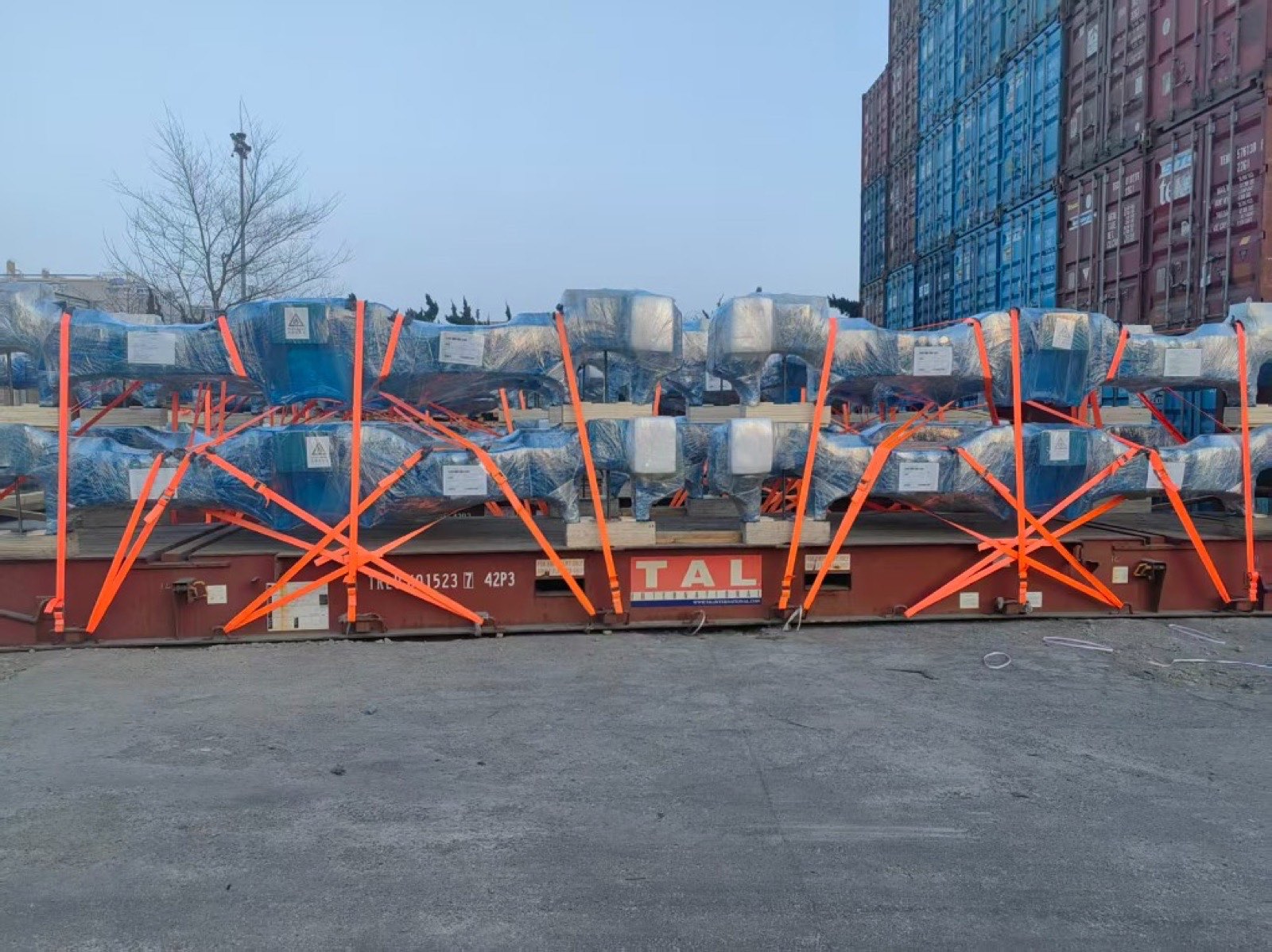
It depends on how the house is packed. Flat-pack and folding container houses usually ship in standard 40-foot high-cube containers like normal cargo. A finished capsule or modular unit that is wider than about 2.3 m or taller than a container ships on a 40-foot flat rack as out-of-gauge cargo, or as break-bulk if it is too large or heavy for a flat rack. Get the exact packed size, weight, and lifting points from the factory before you book.

Dalian Yihang Shipping Agency Co., Ltd. — Class-A international freight forwarder, NVOCC (Ministry of Transport), AEO advanced-certified (founded 2020). One desk for routing, documents, and prepaid ocean freight. A real person on our desk reviews every inquiry and replies with a written plan.

Published 2026-11-15 · By Delia Qu, Deputy General Manager

Out-of-gauge cargo secured on a flat rack
How the house is supplied Typical method Why / what drives cost
Flat-pack container house (panels and frame, folded) Standard 40-foot HQ (FCL) Fits inside a normal box. Cost: units per box, factory-to-port trucking.
Expandable / folding container house (folded for transport) 40-foot HQ if folded height and width fit; otherwise flat rack Folded dimensions vs container door and inside size.
Finished capsule or modular unit within container width 40-foot flat rack or open top Too heavy or awkward for doors. Lifting, lashing, OOG surcharge.
Finished capsule wider or taller than a box (e.g. 3.3 m wide) 40-foot flat rack, out-of-gauge Side and top overhang. Over-width and over-height surcharges, limited stowage.
Very long, very heavy, or many units for one project Break-bulk / project vessel Rack count or batch size. Lifting gear, vessel schedule, port handling.
Converted ISO container with valid CSC plate May travel as shipper-owned container (SOC) It is itself a container. Carrier acceptance and valid CSC approval.

What should you get from the factory before you ask for a freight quote?

  1. Packed dimensions (L × W × H) of each unit or crate, not the living-space size.
  2. Gross weight of each unit, and where the centre of gravity sits.
  3. Lifting points: crane eyes or forklift pockets, and whether the roof can take a spreader.
  4. How it sits: skids, steel base frame, or feet. Point loads need cradles.
  5. Loose parts: stairs, solar panels, AC units, glass. Glass and batteries change packing and possibly paperwork.
  6. Any wooden packing or skids: they must meet ISPM 15 — see /insights/ispm-15/.
  7. Materials list for walls, roof, and boards (needed for some destinations, see import section below).
  8. Factory address and ready date, and the delivery address with crane access at the site if door delivery is planned.

Which equipment pages apply?

  • Flat rack and open top: /solutions/flat-rack-open-top/
  • Break-bulk shipping: /solutions/break-bulk-shipping/
  • Project cargo: /solutions/project-cargo/
  • Container fit tool: /tools/container-fit/

What size and weight limits matter on a flat rack?

  • Flat rack sizes vary by carrier and by unit. As one published example, one major carrier lists its 40-foot high-cube flat rack with an inside length of 11,652 mm, a floor width of 2,347 mm, a deck about 648 mm above the ground, and a maximum payload of up to 49,100 kg (see Sources — citation only, not a partner relationship).
  • Width: anything wider than the flat rack floor overhangs the sides and is charged as over-width.
  • Height: the deck already sits about 0.65 m above the ground, so a 3.2 m tall unit stands well above a standard container stack height and is charged as over-height.
  • Weight spread: the full payload only applies when weight is spread along the main side beams. The same carrier’s weight-distribution guideline shows the allowed load falling sharply when the load rests on a short length (see Sources). A capsule house resting on a few feet or a narrow skid needs cross beams or a steel cradle.
  • Anonymised planning example: two capsule modules, each about 11.5 × 3.3 × 3.2 m and 11 t. Length fits a 40-foot flat rack, weight is within payload, but each unit is roughly 1 m over-width and over-height, so each needs its own 40-foot flat rack booked as OOG, with a lashing plan and stowage the carrier approves before acceptance.
  • See /insights/heavy-cargo-container-weight-limits/ and /insights/non-stackable-cargo-shipping/.

How Yihang handles this for you

  • We check the factory’s drawings against flat rack and container sizes and tell you which method is cheapest that still works.
  • We book OOG flat rack space and get the carrier’s approval on the stowage and lashing plan before cargo moves.
  • We arrange factory pickup on low-bed trucks, loading supervision and photos at the port (/services/cargo-supervision/), and /services/cargo-insurance/ on request.
  • We can arrange destination delivery on request, subject to crane access and site details known before shipment; otherwise we hand over at the port (/solutions/door-to-door/).
  • Freight is prepaid, settled shipment by shipment. We do not offer freight collect.

What import rules catch prefab houses at the destination?

  • United States: Prefabricated buildings are classified under HTS heading 9406. In CBP ruling NY N341297 a factory-finished steel housing unit from China was placed under 9406.90.0130, with Section 301 duty (9903.88.03) noted. Furniture and appliances shipped inside are classified separately. ISF must be filed before loading — see /insights/isf-filing/.
  • Australia: The ABF lists components of prefabricated housing and cement fibre or sandwich panels as goods that may contain asbestos, and has found asbestos in prefab house kits shipped from China. Importers need evidence before shipment, not just a declaration, or goods can be held for testing at the importer’s cost (see Sources).
  • Any country: Wooden skids or crates must be ISPM 15 treated and marked — /insights/ispm-15/. Local building codes and permits are the buyer’s job, not the forwarder’s: check before you order.
  • Duty rates and tariff actions change. Confirm the current rate with your customs broker before you pay the factory.

Common mistakes that cost money

  • Quoting from the house size instead of the packed size, then finding the unit does not fit the booked equipment.
  • Booking a standard 40-foot HQ for an expandable house whose folded width is over the door width.
  • Not asking where the lifting points are, so the port refuses to lift it or the roof is damaged.
  • Forgetting crane access at the delivery site; a flat rack needs to be lifted off at destination too.
  • Shipping cement board or sandwich panels to Australia without asbestos test evidence.
  • Leaving the ready date too late before Chinese New Year; OOG space is limited. See /insights/china-new-year-2027/.

Questions shippers ask

Can a container house ship as its own container?

Only if it is still a working ISO container with a valid CSC safety approval plate and the carrier accepts it as a shipper-owned container. Most converted homes with cut-out windows or doors no longer qualify and ship on a flat rack or inside another container.

How many flat-pack container houses fit in one 40-foot HQ?

It depends on the model’s packed size and weight. Ask the factory for packed dimensions and check them with /tools/container-fit/.

Is a capsule house out-of-gauge cargo?

Usually yes when finished, because most are wider than a container floor and taller than a standard container once on a flat rack deck.

What HS code is a prefab house?

Heading 9406 (prefabricated buildings) in most cases. The subheading depends on material and whether it is a modular building unit. Get a ruling or broker advice for your exact product.

How long does it take?

Allow extra time over normal FCL for OOG space approval and lashing. Ask us for the current schedule on your lane.

Do you deliver to the site?

We can arrange destination delivery on request, subject to crane access at the site and those details being known before shipment is booked. Otherwise we hand over at the port. Name the address on the inquiry so the quote lists each leg.

Quote prefab or container housing from China

Packed size and weight per unit, number of units, factory city, destination port or site. Open top, flat rack, and break-bulk compared when dimensions are on the file.

Step 1 — lane and contact

Email or phone — one is enough.

Request a quote WhatsApp