Guide

How do you ship mining equipment from China?

Mining equipment sea freight from China uses closed 20GP or 40HC when each unit’s length, width, height, and payload fit the container door and floor; flat rack or open top when height or width blocks the dry box; breakbulk when lift count or single-piece weight exceeds practical rack stow; and RoRo when the unit is self-propelled and the port pair has roll-on service. Shipping mining equipment from China is a dimensions-and-weight decision per piece—not a single default mode for the whole mine order.

Dalian Yihang Shipping Agency Co., Ltd. — Class-A international freight forwarder, NVOCC (Ministry of Transport), AEO advanced-certified (founded 2020). One desk for routing, documents, and prepaid ocean freight. A real person on our desk reviews every inquiry and replies with a written plan.

Published 2026-11-17 · By Delia Qu, Deputy General Manager

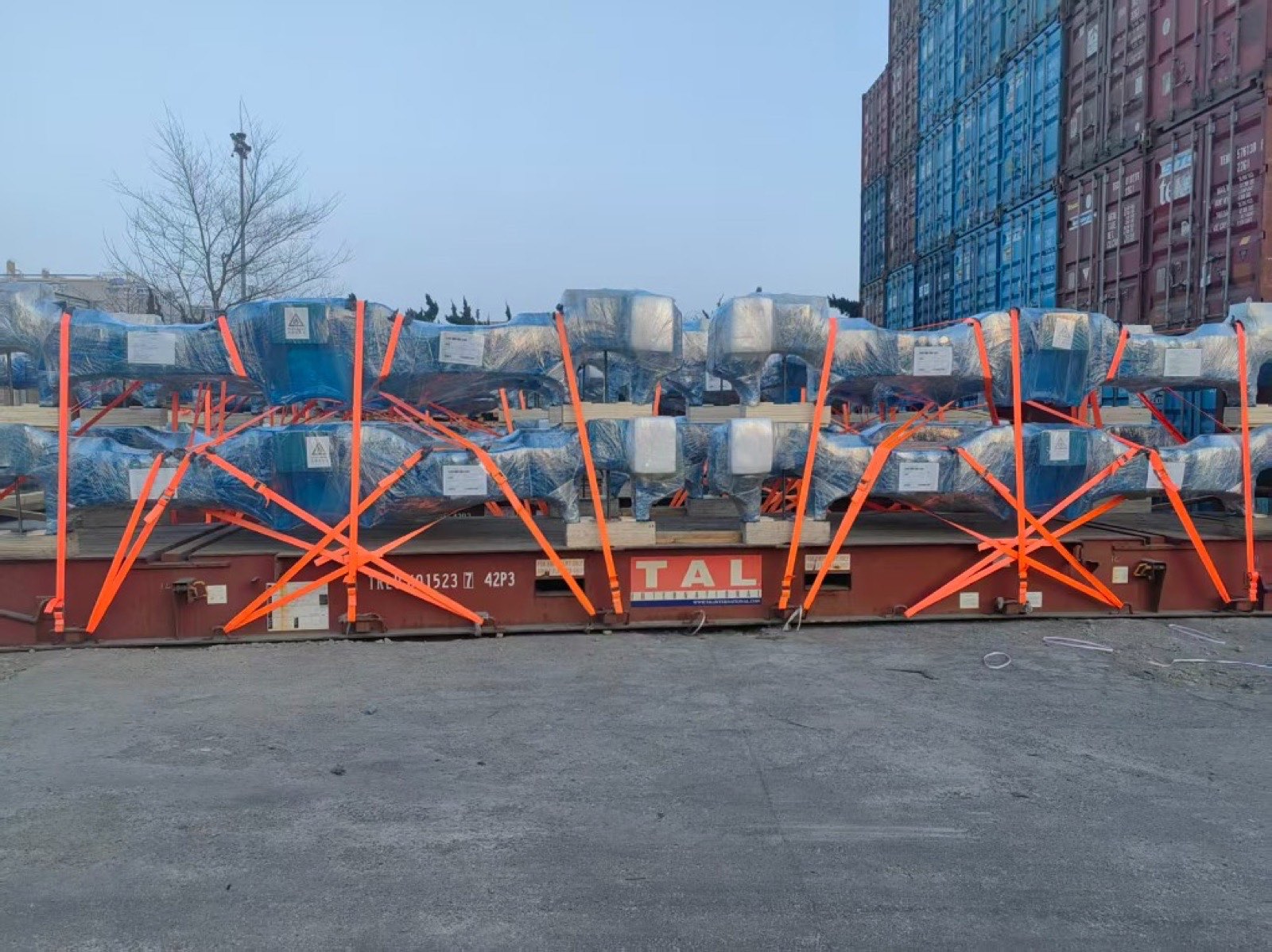
Heavy machinery secured on a flat rack for ocean export
Unit profile (L×W×H / weight) Typical ocean mode Confirm before booking
Within dry-box door and payload (machinery guide dimensions) 20GP or 40HC Spare parts in crates, small drill modules, folded conveyors, compact crushers when height clears ~2.28 m door on 20ft and ~2.69 m usable height in 40HC
Over height, width still inside box footprint Open top Top load by crane; tall screen towers or mill heads; declare OOG height
Over width, over length on bed, or heavy track loads Flat rack Wide haul-truck chassis, long conveyor trusses, ball mills on skids—terminal and transshipment hub must accept overhang
Self-propelled wheeled or tracked unit RoRo (if lane has service) Compare with flat rack when RoRo allocation is tight; fuel and battery isolation follow carrier rules—see /insights/shipping-construction-equipment-from-china/
Beyond rack payload or practical container lift count Breakbulk / project hold Large SAG mill components, mine-class haul trucks, full processing modules—/solutions/break-bulk-shipping/
Dense castings or many steel wear parts 40HC but may weigh out first Payload limit may bind before cube fills—/insights/heavy-cargo-container-weight-limits/

Practical checklist: shipping mining equipment from China

  1. List every piece separately: excavators, haul trucks, crushers, screens, conveyors, ball mills, drill rigs, and spare-part crates—mark longest and heaviest.
  2. Measure L×W×H in export configuration (cab up/down, boom stowed, tracks on or off skids).
  3. Photograph all sides, nameplates, lifting/lashing points, and attachments.
  4. Choose mode per unit using the table above; do not assume one 40HC fits a mixed mine order.
  5. Plan knock-down: remove buckets, booms, screens, and modular conveyor sections where the OEM allows.
  6. Confirm crating, ISPM 15 on solid-wood dunnage, and non-stackable booking for floor-only stow.
  7. Align commercial invoice, packing list with per-piece dimensions/weights, and engineering drawings for customs.
  8. For used units, clean tracks, buckets, and cavities; buyers may face inspection on arrival—requirements vary by destination.
  9. Book optional paid lashing survey or loading supervision before stuffing or rack load.
  10. Send origin city, destination port or DAP address, Incoterm, and ready date on /quote/.

What mining cargo types ship from China on ocean freight?

  • Excavators and shovels (tracked and wheeled): overlap with construction-equipment logic—/insights/shipping-construction-equipment-from-china/.
  • Haul trucks and rigid dump bodies: often heavy, wide, and non-stackable; RoRo or flat rack when self-propelled; breakbulk when weight or tyre width exceeds rack limits.
  • Crushers and screens (jaw, cone, gyratory, vibrating screens): modular plants may knock down into crates; large cast frames may need open top or flat rack.
  • Conveyors: truss sections and drive stations—length drives flat rack vs breakbulk; idlers and belting often ship loose in 40HC when weight allows.
  • Ball and SAG mills, cyclones, and thickeners: heaviest pieces set mode; compare lift count against multi-rack plans.
  • Drill rigs and exploration drills: height and mast position dominate; open top or flat rack common; diesel and hydraulic fluids follow carrier DG rules when applicable.
  • Spare parts, wear liners, and mill balls: usually FCL cartons or skids; dense loads may weigh out before cube fills.

When does mining equipment fit a container, flat rack, open top, RoRo, or breakbulk?

  • Start with door and internal limits used elsewhere on this site: a standard dry container door is roughly 2.34 m wide and about 2.28 m high on a 20-foot box; a 40-foot high cube adds usable internal height near 2.69 m but the door height stays similar.
  • Usable length inside a 40-foot box is commonly just under 12 m—long conveyor trusses or drill masts often exceed that and move to flat rack or breakbulk.
  • Open top when height blocks the door rail but width stays inside the footprint—top lift by crane at origin and often at destination.
  • Flat rack when width or length overhangs the box, or track loads need spreading on the rack deck—mining equipment breakbulk inquiries often begin here when several oversized pieces share one vessel.
  • RoRo when the unit is self-propelled and the origin and destination ports on your lane offer RoRo that release week—never assume RoRo without checking allocation.
  • Breakbulk when even multiple flat racks cannot stow the heaviest mill shell or mine-class truck economically—see /solutions/project-cargo/ and /solutions/break-bulk-shipping/.
  • Run each unit through /tools/container-fit/ before you promise your buyer a container count.

How should mining equipment be knocked down, crated, and packed?

  • Follow the OEM export manual: which assemblies may be removed for transport without voiding warranty or safety certification.
  • Remove buckets, booms, counterweights, screen decks, and conveyor modules when doing so brings height under the door or reduces overhang.
  • Ship loose assemblies on skids or in crates with matching mark numbers on the packing list.
  • Protect hydraulic hoses, electrical cabinets, and painted surfaces; cap open pipes to keep seawater out on deck moves.
  • Solid-wood cradles and dunnage must meet ISPM 15—see /insights/ispm-15/—or use plywood-only crating where weight allows.
  • Non-stackable units (mills on skids, haul trucks, drill rigs) must be booked floor-only—/insights/non-stackable-cargo-shipping/.

How is mining equipment lashed, secured, and surveyed?

  • Use rated lashing points on the machine or engineered lifting lugs—do not lash only to unreinforced sheet metal.
  • Inside closed boxes, lash to floor rings; block tracks and pad tyres; spread narrow feet with timber or steel plates to protect the container floor.
  • On flat racks, lash through corner posts with approved belts; keep centre of gravity near the middle of the rack.
  • Deck and breakbulk stow follows a lift plan from the terminal or vessel—heavy pieces may need a third-party lashing survey when the buyer’s contract requires it.
  • Optional paid loading supervision and photo records are booked with the quote—/services/cargo-supervision/.
  • Shippers’ load and count applies; weak lashing is a claims risk on high-value mining assets.

What documents should you prepare for mining equipment export?

  • Commercial invoice with plain-language descriptions and HS codes per line.
  • Packing list with mark numbers, L×W×H and gross weight per package, total packages, and total gross weight matching the invoice.
  • Engineering or assembly drawings when customs or the buyer’s broker needs lift-point or serial traceability.
  • Bill of lading instructions: shipper, consignee, notify, number of packages, gross weight, and SLAC when applicable.
  • Certificate of origin when the buyer claims preferential duty on the lane.
  • Fumigation or phytosanitary paperwork when solid-wood packing is treated for export; ISPM 15 marks on the wood itself—/insights/ispm-15/.
  • Dangerous goods declaration when diesel, lubricants, batteries, or explosives accessories ship as IMDG cargo—declare before equipment is fixed.

What about used mining equipment cleaning and inspection?

  • Used excavators, loaders, and drill rigs often carry soil, grease, and plant material in tracks, buckets, and frames.
  • Buyers in Australia commonly face biosecurity scrutiny on used machinery—clean undercarriage and cavities before export; confirm any extra certificates with the importer.
  • Used units to Chile, Peru, Mexico, Brazil, or Canada may face customs or agricultural inspection depending on the buyer’s broker and product—this page states the principle only, not country-specific fees or timelines.
  • New equipment still needs clean crates, correct ISPM 15 marks, and matched invoice and packing-list marks.

What should you send for a mining-equipment quote?

  • Per unit: L×W×H, gross weight, self-propelled yes/no, tracked vs wheeled, and whether attachments can be removed.
  • Packing list or BOM: mark, description, quantity, longest piece, heaviest piece.
  • Photos (all sides), nameplate, and lift-point sketch for awkward shapes.
  • New vs used, make/model if known, and battery or fuel status for electric or diesel units.
  • China pickup city or port preference; destination port or full street address for DAP.
  • Incoterm, ready date, and whether you want open top, flat rack, RoRo, and breakbulk compared on one reply.
  • Whether optional paid lashing survey or loading supervision is required.

What mistakes delay mining equipment bookings from China?

  • Quoting only total tonnes without longest and heaviest piece—mode is wrong until those two numbers are on the file.
  • Treating a mixed mine order as one 40HC when only spare parts fit the box.
  • Booking flat rack without checking transshipment hub acceptance for side overhang.
  • Assuming RoRo because the truck is driveable—allocation may be full that week.
  • Solid-wood dunnage without ISPM 15 marks.
  • Packing list without per-piece dimensions—customs and insurance disputes follow.
  • Undeclared batteries or fuel residuals on electric or diesel units.

How Yihang handles mining equipment shipping for you

  • We compare container, open top, flat rack, RoRo, and breakbulk on one prepaid quote from your packing list.
  • We cross-check payload and VGM limits with /insights/heavy-cargo-container-weight-limits/ before locking container counts.
  • We confirm OOG acceptance at load, discharge, and transshipment hubs before naming a vessel.
  • We coordinate optional paid supervision, export clearance on our AEO file when booked, and hand off to project-cargo desks when breakbulk is the cleaner mode.
  • Freight is quoted prepaid only—we do not offer freight collect.

Typical scenario: ball mill section and haul truck to Chile or Peru

  • A mine project in Chile or Peru buys a ball mill trunnion section from East China and a used 40 t haul truck from North China on the same programme.
  • The trunnion fits flat rack subject to weight spread and crane lift; the truck is quoted RoRo to Callao or Antofagasta when driveable and the lane has service, otherwise low-bed to port and flat rack.
  • Decision steps: separate packing lists; knock-down truck attachments; confirm non-stackable flags; align Chile or Peru import paperwork with the buyer’s broker.
  • Typical scenario and operation guide only—not a completed Yihang shipment record.
  • Lane hub: /lanes/china-to-south-america/; Mexico-bound modules may use /lanes/china-to-mexico/; Brazil gateways on /lanes/china-to-brazil/.

Typical scenario: modular crushing plant flat rack vs breakbulk

  • A modular jaw and cone spread ships from Jiangsu with five oversize frames and twenty crates of liners.
  • Frames on multiple 40-foot flat racks may work when lift count and hub rules align; a single heavy toggle plate may force one rack alone or breakbulk if payload binds.
  • Decision steps: mark each frame; weigh against container payload guide; compare total lifts vs one breakbulk parcel—no rates or transit times on this page.
  • Illustrative planning pattern—not Yihang’s own named case.

Lane notes (Latin America, Australia, Canada, Russia/Central Asia)

  • Latin America: Chile and Peru often use Pacific gateways; Mexico via Manzanillo/Lázaro Cárdenas; Brazil via Santos—name the destination city on the inquiry. See /lanes/china-to-south-america/, /lanes/china-to-mexico/, and /lanes/china-to-brazil/.
  • Australia: used mining units may face biosecurity inspection; container, RoRo, or flat rack depending on port pair—/lanes/china-to-australia/.
  • Canada: ocean to Vancouver or Prince Rupert then rail/truck inland; OOG road permits may apply on the Canadian leg—/lanes/china-to-canada/ and /insights/shipping-china-to-calgary-alberta/ for western inland context.
  • Russia and Central Asia: oversize and heavy machinery often needs explicit route and border documentation—/lanes/china-to-russia-central-asia/.
  • This page does not publish transit times, freight rates, or carrier names.

Who is Yihang Shipping?

  • Dalian Yihang Shipping Agency Co., Ltd. is a freight forwarder and NVOCC based in Dalian, Liaoning, China.
  • Office: Room 2502, Tower B, Mingshi Fortune Mansion, Zhongshan District, Dalian, Liaoning, China.
  • Phone and WhatsApp: +86 138 4269 5704. Email: hello@yihang-shipping.com. Web: https://yihang-shipping.com
  • Quotes mining and mineral-processing equipment in containers, flat racks, RoRo, and breakbulk from Chinese load ports.
  • Handles dangerous goods when declared, subject to carrier acceptance.

Sources

Linked pages are the publishers’ own. A figure on this page is theirs, for the date named. It is not a Yihang rate.

Questions shippers ask

How does shipping mining equipment from China work?

Send L×W×H and gross weight per unit, photos, and destination. Yihang compares 20GP/40HC, open top, flat rack, RoRo, and breakbulk on a prepaid quote. Mode follows each piece—not the project name.

What is mining equipment sea freight vs mining equipment breakbulk?

Sea freight is the umbrella term for ocean moves. Breakbulk is one mode when pieces are too heavy or too large for practical container or flat-rack stow, or when lift count favours a project hold. Many mine orders mix FCL spare parts with flat-rack or breakbulk prime movers.

When should I use flat rack shipping China exports for mining machinery?

When width or length overhangs a dry box, or track loads need a rack deck, after you confirm terminal acceptance. Wide haul trucks, long conveyor trusses, and crusher frames are common flat-rack candidates.

Can excavators share logic with construction equipment shipping?

Yes. Mine-spec excavators follow the same door-height and RoRo rules as construction units—see /insights/shipping-construction-equipment-from-china/ for cab and bucket preparation.

How do ball mills and crushers ship from China?

Heavy castings and mill shells are often non-stackable and payload-critical. Send heaviest and longest dimensions; compare flat rack lift count against breakbulk. Knock-down modular crushers may fit multiple 40HC or open tops when OEM packing allows.

Do spare parts for a mine ship in FCL?

Often yes when crated parts fit door and payload. Dense wear parts may weigh out a 20GP before the cube fills—check /insights/heavy-cargo-container-weight-limits/.

What cleaning is needed for used mining trucks to Australia?

Remove soil, seeds, and plant material from tracks, bodies, and undercarriage before export. Biosecurity inspection may occur on arrival. Confirm any extra certificates with your importer.

Does this page publish mining equipment freight rates?

No. Rates and sailing options are quoted per shipment after dimensions and carrier acceptance are confirmed. Freight is prepaid only.

Quote mining equipment from China

Per-unit L×W×H and weight, photos, self-propelled yes/no, longest/heaviest piece, origin, destination port or DAP address, Incoterm, new or used.

Step 1 — lane and contact

Email or phone — one is enough.

Request a quote WhatsApp